

Autumn-tide has begun in earnest, and in between navigating the heavier traffic of the highways of this season, flickering memories of some of the summer byways that I’ve ambled along come to me. One of my favourites is the meadow path veering off the main trail in a nearby nature park. Now, as the busy highways intersect my path and on which I must travel at a quicker pace, I’m recalling the exquisite quiet of the narrower, less-frequented path. The byway: a brief interlude of tranquility, a space in which to recollect, reaffirm, and regrow deep hope. One is reminded of Robert Frost’s lines in his poem “The Road Not Taken”: “Two roads diverged in a wood, and I—/ I took the one less traveled by,/ And that has made all the difference.” The less-traveled road that makes all the difference—this thought is enough to pause a heartbeat, to wonder what many things I have missed, things I have needed, as I wrestle within the frenetic pace of much of life. Byways: where and how will I find these byways of respite in this busier season?
We are an anxious people. In a world where hurry, busyness, and so-called efficiency are regarded as virtues, where the phrase “time is money” is touted about, it’s easy to forget that in the bigger picture time is a golden gift, a precious amount of life, and life that cannot rightfully be reduced to base economics. The poet Seamus Heaney emphasized the Anglo-Saxon idea in the poem Beowulf that ours is a “lease” on life; we don’t in this sense “own” our lives. The Bible likewise urges us to consider the length of our brief days on planet earth and to invest them well for the things of eternal consequence: that is, in what matters most in the here and now and therefore in the always. This means people, not things. So, no, as important as money is, let’s remember it’s a tool that should be invested for good, not a god worthy of worship. And in this gift of time, that is so easily fraught with overload, well, what might be the place of byways? Where are the byways to be found?
Byways. The simplicity of this word sounds antiquated, even too good to be accessible, in the world of the superhighways of the internet and busy speedways on which we travel. And yet, we are often anxious and weary people in need of rest. This isn’t easy to find in a climate where rest is typically, so it seems, a rare commodity. (Proof in point on being beholden to the “time is money” ethos: I just used the economic term “commodity” for rest, when I might have used the spiritual term “gift,” or arguably the medical term “necessity.”) This summer, when I needed more rest than I expected, I was asked to give a sermon, and my instant inner response, “No, I’m too busy,” changed to, “Oh dear, okay, I think I shall.”
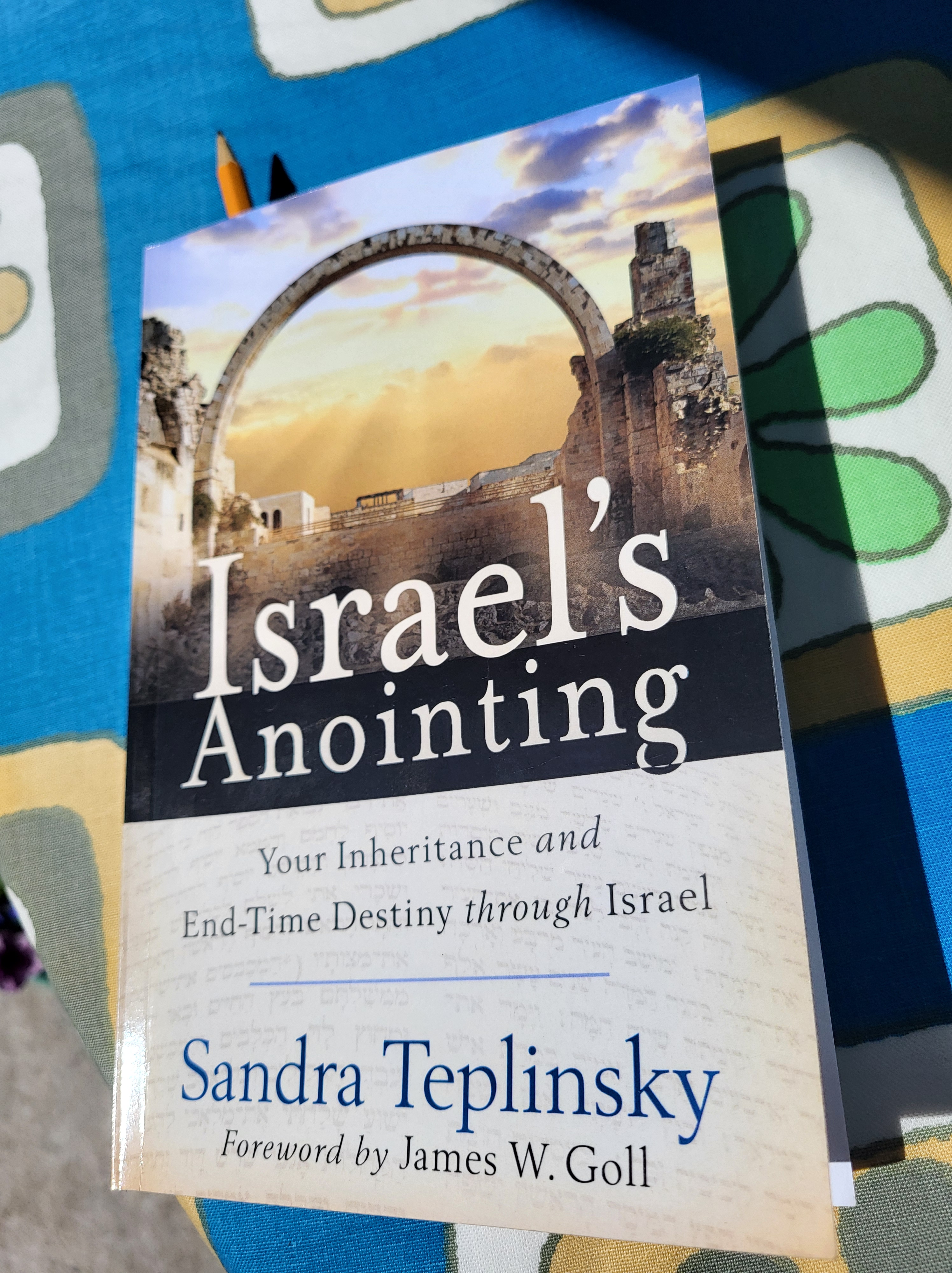
I’d been inspired by Sandra Teplinsky’s chapter “Sabbath Rest” in her book Israel’s Anointing in which she helps us to consider the reasons for chronic fatigue syndrome. In short, she points to the sociologists who have used the word affluenza (Oxford English Dictionary cites 1908 as the first appearance of this word), and invites us to consider the joy of regular restorative rest. Among much else, I was struck by Sandra’s point that when Jesus rested, he was not doing “nothing”: he was resting. And that rest is a sign of God’s grace, indeed, of God’s character, and so part of the cosmic design and therefore in our DNA. Well then! To resist one’s DNA—not so good, right? Here’s the link to my sermon: https://www.youtube.com/watch?v=I4FE3X14yzc&list=PLvTrrrwIs7nghGEDC1dQdzmgKZoQqMrWS&index=5 And Victorian author George MacDonald in his novel Wilfred Cumbermede puts it this way: “Work is not always required of a man. There is such a thing as a sacred idleness, the cultivation of which is now fearfully neglected.” Good rest as sacred, as a conscious reclaiming of the desacralized hurry-and-worry mindset: a powerful thought.

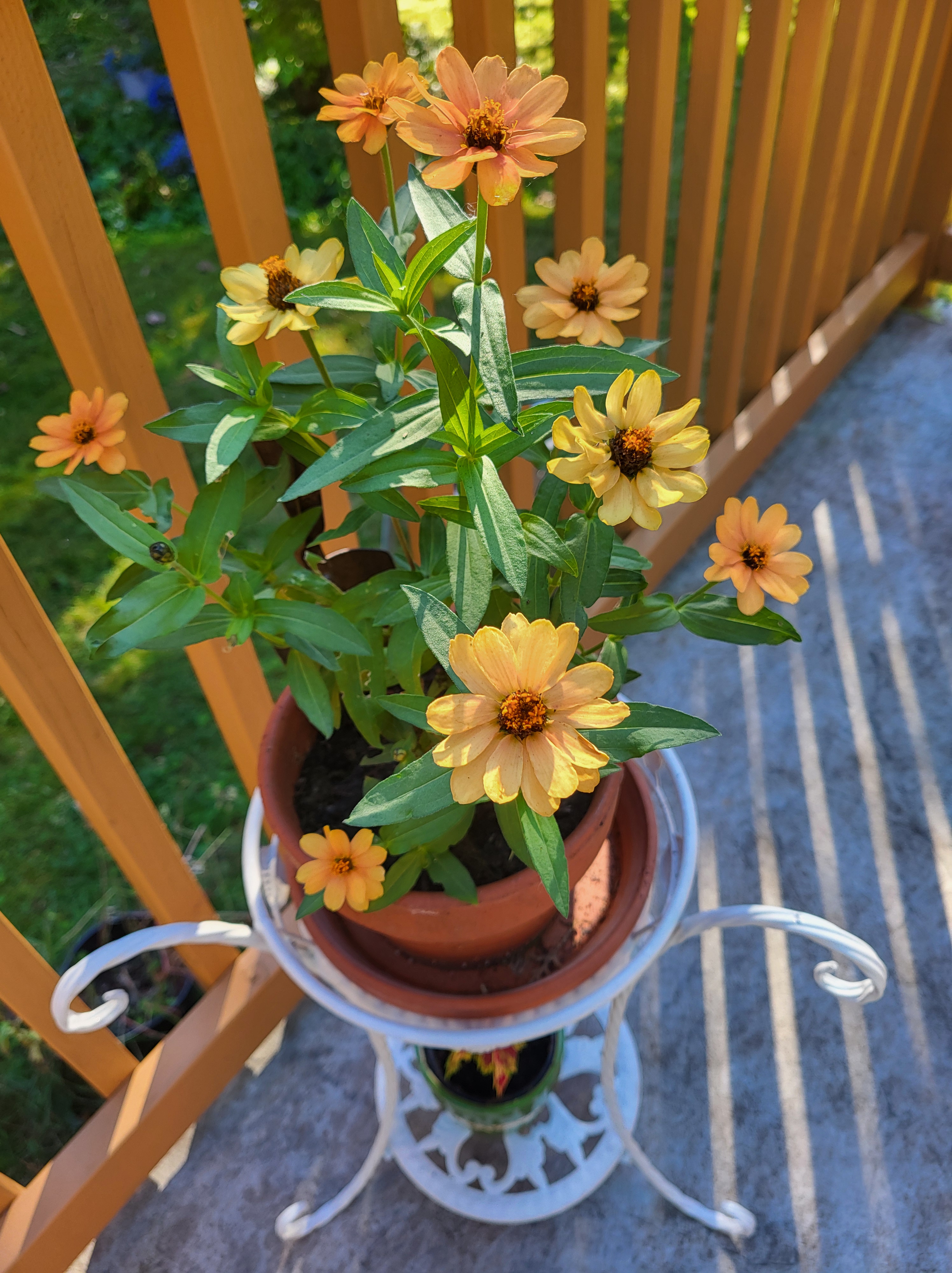
So this past summer, needing more rest, I consciously focused on small things. Like the first blossom on what I whimsically call my Owen Wilson flower (fun fact: this plant came from the actor’s film set at our church this past season, one of several plants that we parishioners afterwards happily received). Frankly, by the time I got it (no fault of the actor’s, since I’d been out of town) I didn’t think the plant would make it. But, see, with regular watering, so many grateful flowers have bloomed and are resilient still. Attentiveness to very small, good things has blessed me.
Small things, byways. Breathers to regain our strength and sanity for the much that lies before us. But how to do so in a world where small people watering small plants don’t seem to matter much? Lately, I’ve had ample opportunity to notice how technology attempts to reshape our thinking. In the effort to keep up with the latest for-me-required technological updates, I’ve watched myself thinking in jerky-like patterns for too many hours, jerky stress-inducing patterns of the human being attempting to conform to machine-induced patterns, patterns far, far from the quiet meadow paths and the deeper, wider sweeps of thought which can result in intellectual and creative output. (Oh no, I’ve used the machine word “output” instead of, what? Oh yes, remind me of better words: “the stuff of symphonies, sagas, even humbler sonettos,” you say? Thank you, yes. I appreciate the reminder.)
Oh, increasing technology. For better, we think, but also for worse, we’ve been lured, coaxed, and to some extent forced into submission to technology with the promise of labour-saving and therefore time-saving schemes. But technology is a beast, I’d say. Technology is a beast designed to bear our burdens and yet, like a beast, it can turn on us and snarl, or like the fairy tale creature turn to stone, refusing to budge until we’ve remembered the magic word. You know: if the stone-beast could originate some form of rational language (originate, not mimic), it might say, “Do this task in this one way, only this ONE WAY. Don’t forget the whatdoyoucallit step you were supposed to instantly remember, and whizzo, you’ll arrive at bliss!” Meanwhile, being human, being way beyond smarter than any machine (let’s recall what we intuitively know), we yelp to the unfriendly stone-beast, “This is such a time-waster!” And maybe protest, “Life wasn’t meant to be this way!” But the beast, ever-growing, is ever-hungrier for one’s lifeblood.
Briefly said, the Machine Age hasn’t done us a huge favour in every single aspect of our lives. While we don’t typically volunteer to return to the Stone Age, it could help to recall that this “new normal” of technocracy needs all the intelligence, wit, creativity, guts, humour, and, yes, Sabbath rest, that is ours for the asking in order to thrive as human beings. One essay that helps me reset (oops: machine metaphor—rather, helps me to revive—thanks!) is C.S. Lewis’s 1954 Inaugural Lecture at Cambridge University De Descriptione Temporum in which he also speaks to the impact of the Machine Age. And, moreover, since the Son of Man, our Lord Jesus Christ, regularly took time out in solitude, including the Sabbath rest, then I am encouraged to join Him in order to recover my life. To cite Eugene Peterson’s paraphrase of Matthew 11: 28-30 in The Message: Jesus said, “Get away with me and you’ll recover your life. I’ll show you how to take a real rest. Walk with me and work with me—watch how I do it. Learn the unforced rhythms of grace. I won’t lay anything heavy or ill-fitting on you. Keep company with me and you’ll learn to live freely and lightly.” But to do this, there’s a lot that I’ve got to resist, reject, especially my own tendencies (mild word) to fretting. Instead of fear, I’ve got to choose to trust. Since I’m being asked to trust the Creator and Sustainer of all things, well then, how would you complete this thought?
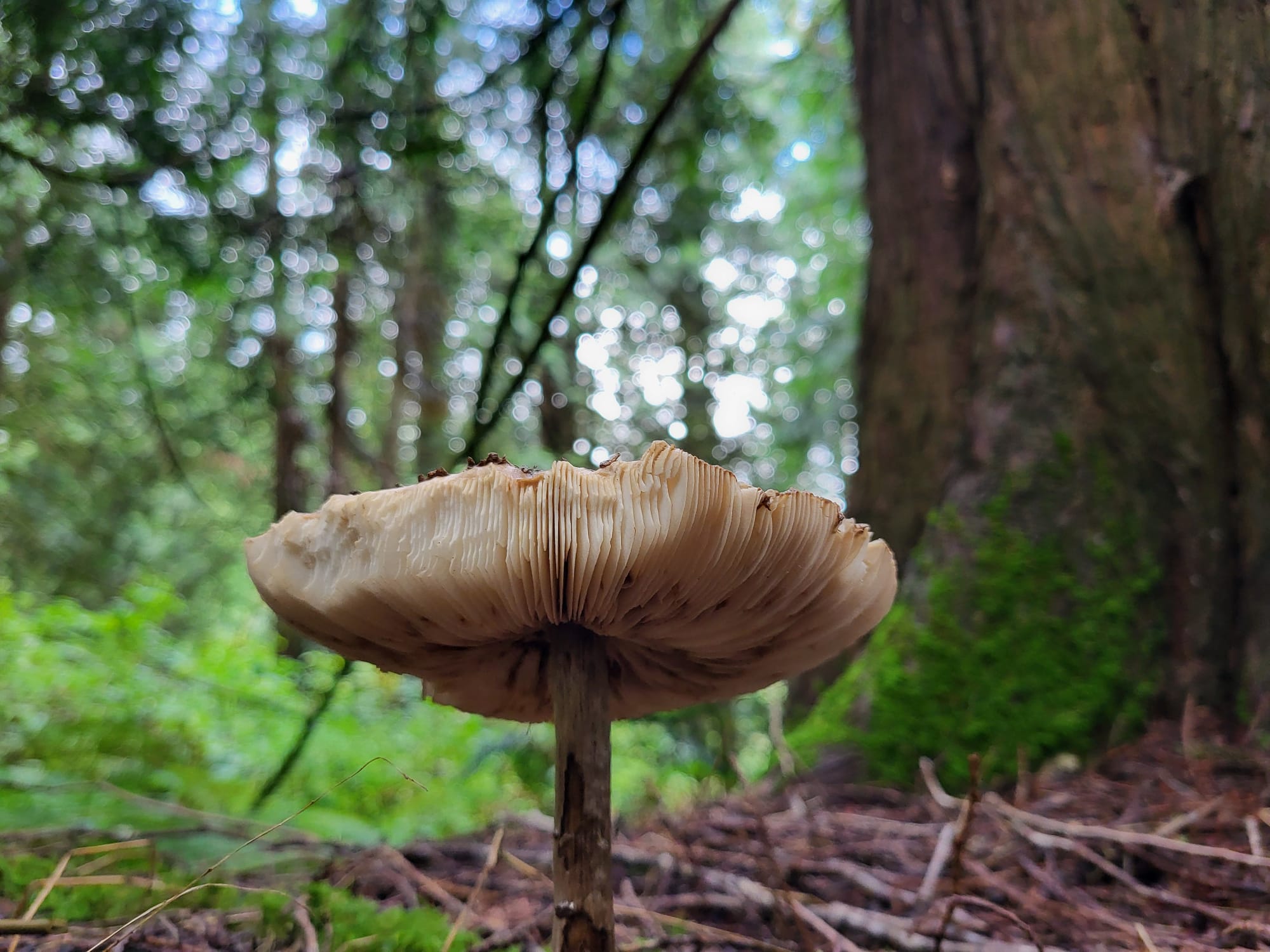
This autumn-tide, encouraged also by J.R.R. Tolkien’s The Fellowship of the Ring, I hope to take my road from where it has begun, “pursuing it with eager feet,” sometimes “with weary feet,” as it has already joined a larger way “where many paths and errands meet.” On this autumnal journey, I hope to take some byways where I will see more newly sprouted mushrooms after the summer drought—when we had wondered if they would ever come back again, and here they are after the first decent rainfall, a sign of the earth so fertile still, so fertile. For myself, and for you, Cherished Reader, in this often-busier harvest season (for teachers, though, it’s planting season), I hope that we will find the beauteous byways that will help us to enter vital rest for our souls.
Thanks for reading, for listening.
You can order your copy of Letters to Annie at Amazon, FriesenPress, or through your local bookstore.
Sign up to receive my blogs at https://monikahilder.com/
Follow me on Social Media:
Watch for my December blog, “Highways.”
 Monika Hilder
Rest is good. Iâm also thankful for the technology th
LikeLike