
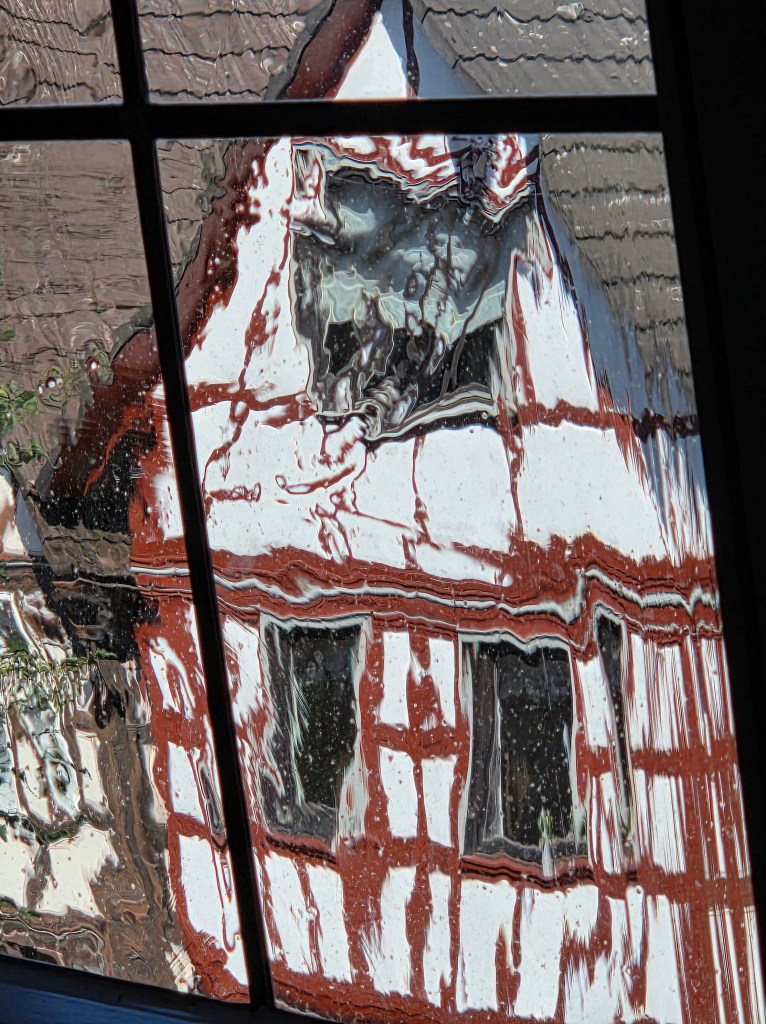
This shimmering view through the thick medieval glass windowpane arrests me. The call to Halt, look, see again, seems to whisper into the air that hovers just above me, or all about, or even deeper within. This wavy scene—a thing of beauty itself—in which I recognize yet also see anew the centuries-old traditional European half-timbered house across the street, as I did recently, invites me into a perspective that I rarely have. To get the chance to see a solid historical building as if it were liquid, flowing, melting, dissolving—what a thing! What questions such a sight can give rise to.
As I marvel over this scene, I ask myself, how do we go about seeing things? Which lenses are our go-to ones? How do we arrive at choosing the lenses which we believe give us the true or most-probably-true picture? And just where do our preferred lenses come from—or, better said—how do we, or other lens-makers we may defer to, go about making them?
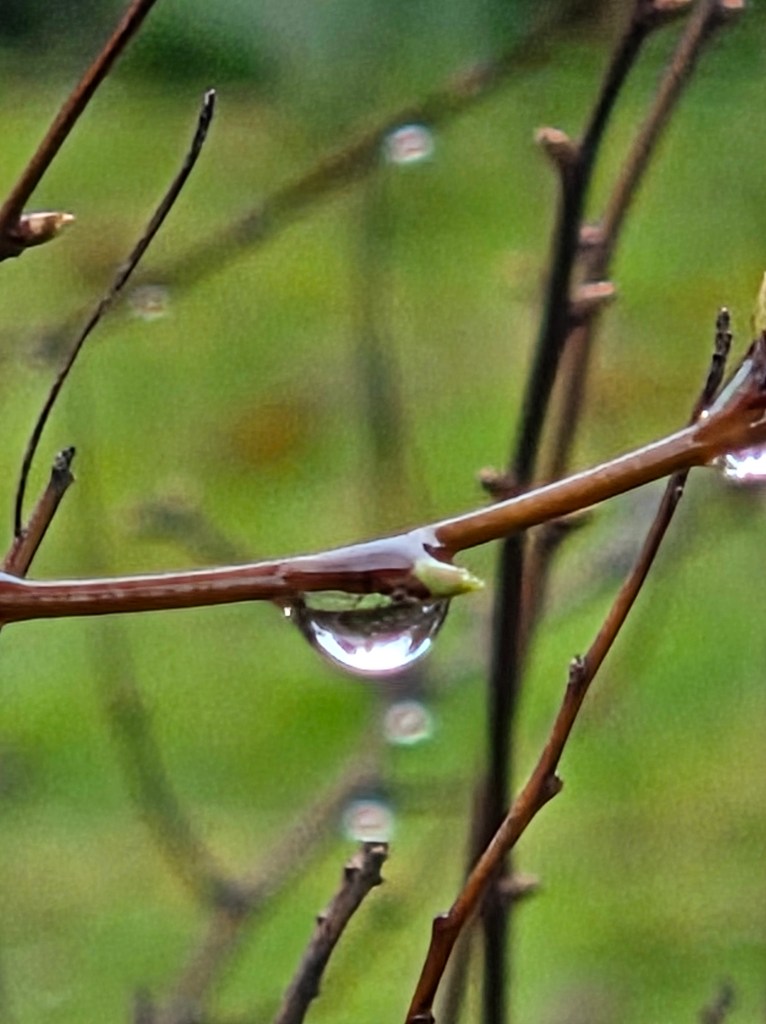
The medieval craftsman who made this windowpane through which I was privileged to look through over 400 years later used a hand-blown glass technique which resulted in these rippling distortions. Whereas modern glass is flat, theirs was not. Whereas a modern view is one-dimensional, a medieval view offers a fluidity that suggests multi-dimensionality. Here’s a thought: what if, in some ways, a fluid view points to an intricacy about reality which the trusted one-dimensional view resists? Of course, this possibility is both unsettling and intriguing. But perhaps just as we can overlook the fulsomeness of a single raindrop or, alternatively, linger to see how it mirrors a much greater outer reality, so we may find our willingness to consider multi-faceted perspectives very rewarding.
But what is rewarding may also be unsettling—unsettling to what we expected to find. In her excellent article in response to new observations from the James Webb Space Telescope, Kay Rubacek writes about how unsettling such discoveries can be, pointing out, “The more precisely we see, the more clearly we encounter limits, not just in our theories, but in what our tools can give us.” And she challenges us to consider what our limitations show us, stating, “reality is more carefully made, more grand, and more mysterious than we could have ever imagined.” Rubacek concludes, “Perhaps the next step forward isn’t to look harder, but to look more wisely, to relearn how to see with the eyes we have been given.”
Relearning how to see things is demanding. I often return to C.S. Lewis’s challenge to us about having a guarded, even dissident, approach to popular opinions. In The Problem of Pain, he wrote, “Now I take a very low view of ‘climates of opinion’. In his own subject every man knows that all discoveries are made and all errors corrected by those who ignore the ‘climate of opinion.’” This statement inspired some interesting discussion in one of my classes the other day. We considered the question, “Can we ignore the climate of opinion?” “And if so, how do we go about it?” I’d say, for a baseline, we should remember not to confuse theory with fact. We would do well to remember that the answers we get depend rather much on the sorts of questions we ask. We have our blind spots. So it takes humility to be able to say, “To the best of my understanding I think this theory explains reality, but I could be wrong.” I’d say that the best thinkers have this sort of humility. The English poet William Cowper put it this way: “Knowledge is proud that he has learned so much; wisdom is humble that he knows no more.”
Then the next question could be this: “How willing are we to question predominant or just very loud voices?” Inertia, an unwillingness to think, is a common malady. Understandably so. It takes hard work to think, and the rewards are not easily measured as we measure rewards in this world. Fear factors into our reluctance to think too because if we do it well we risk being countercultural. Are we willing to pay that price? Alternatively, are we willing to pay the price of always conforming to the culture, never seeking to add our own voices for the possibility of betterment?
To this large topic about seeing things, I offer these further reflections.
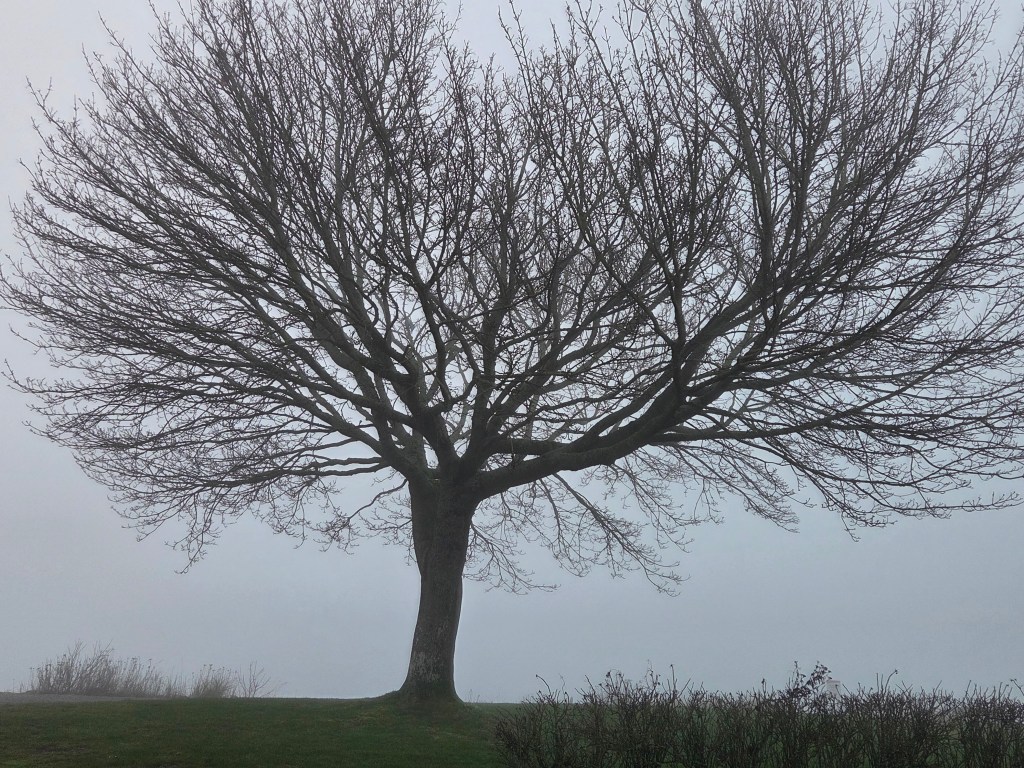
Fittingly for this season of Lent, but whenever we enter a season of grief, it can feel like we are staggering through fog—cold, bone-chilling fog which seems too heavy to ever lift, too dark to be shot through with light. As C.S. Lewis wrote in his opening lines in A Grief Observed, it feels like being “mildly drunk, or concussed.” We see only in part and in fact may not even wish to see much at all. In such fog, the promise that we shall see in fullness may not readily come to mind because the familiar surroundings are too heavily blanketed by grief. Grief is a time that requires patience with oneself—patience with oneself and something like endurance, however weak or devastated one is. This is the patience of the weary sojourner who puts yet one more foot in front of the other, again and again and again, not knowing and not demanding to know how much longer the journey will last. Trusting too, in the One who has set us on our journey in the first place, trusting in the good final destination. How can we do it?
Here I am reminded of a note that Alfred, Lord Tennyson made on his famous poem “Crossing the Bar” in which he spoke of the hope that he will “see [his] Pilot face to face” when he has “crost the bar.” Significantly, Tennyson noted, “The pilot has been on board all the while, but in the dark I have not seen him.” What a thought. The unobserved Pilot. While the flat one-dimensional view hides perception of the Pilot of our lives, He is there, solid, real, permanent, guiding us through the flowing, melting, dissolving things of this life. The dark glass will vanish on that day when we shall know even as we are known (I Corinthians 13.12). We must ask, “What if, just what if, what Christians believe is true?” What if you hear a voice one day, calling you by name, saying, “The Resurrection is real, my friend”?
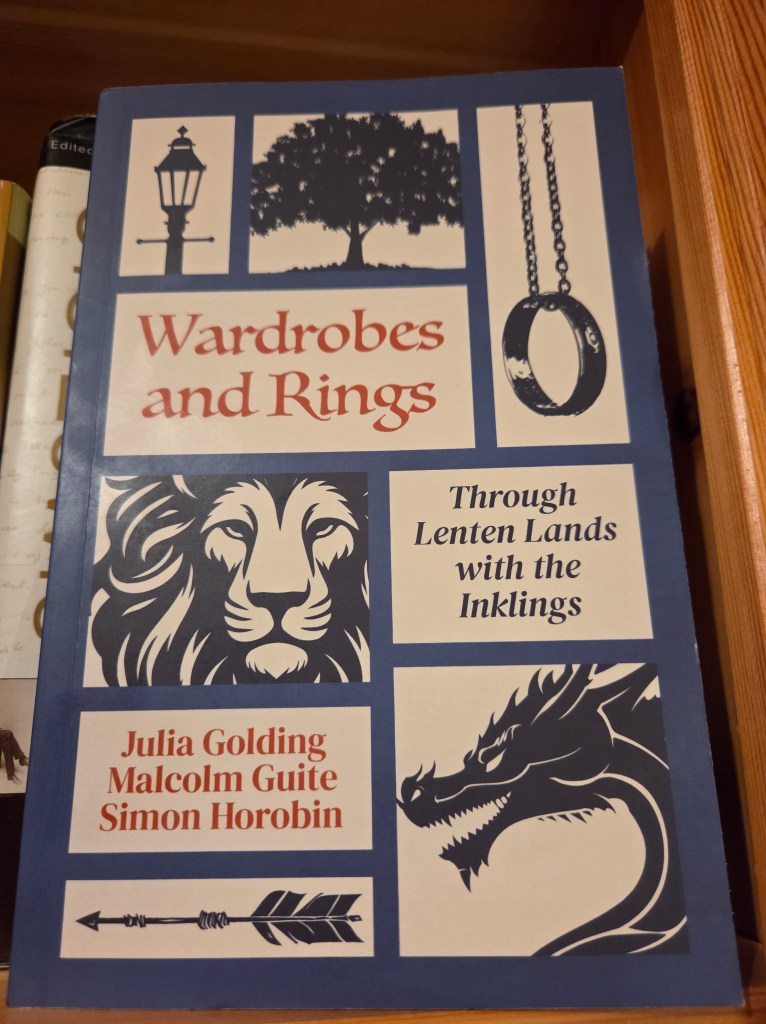
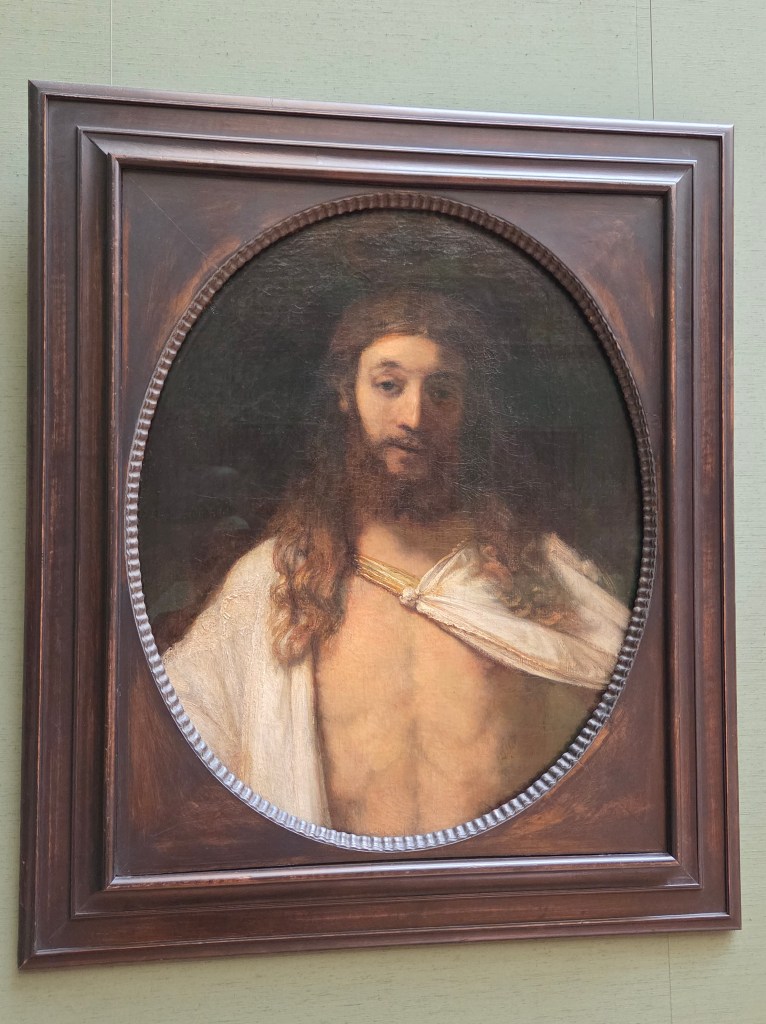
The painting “The Resurrection of Christ” by Rembrandt hanging in the museum Alte Pinakothek in Munich beckons such questions. And in Wardrobes and Rings: Through Lenten Lands with the Inklings, Malcolm Guite asks: “Have you had an experience when the veil is lifted and you seem to see things in heaven’s light?” But coming from a fog-driven flattened view of things, we need help. In truth, we need a salve that can heal and restore our weak and wounded sight. A salve, I think, no less than the spittle of Jesus mixing with this good earth will do. Will we accept such salve?
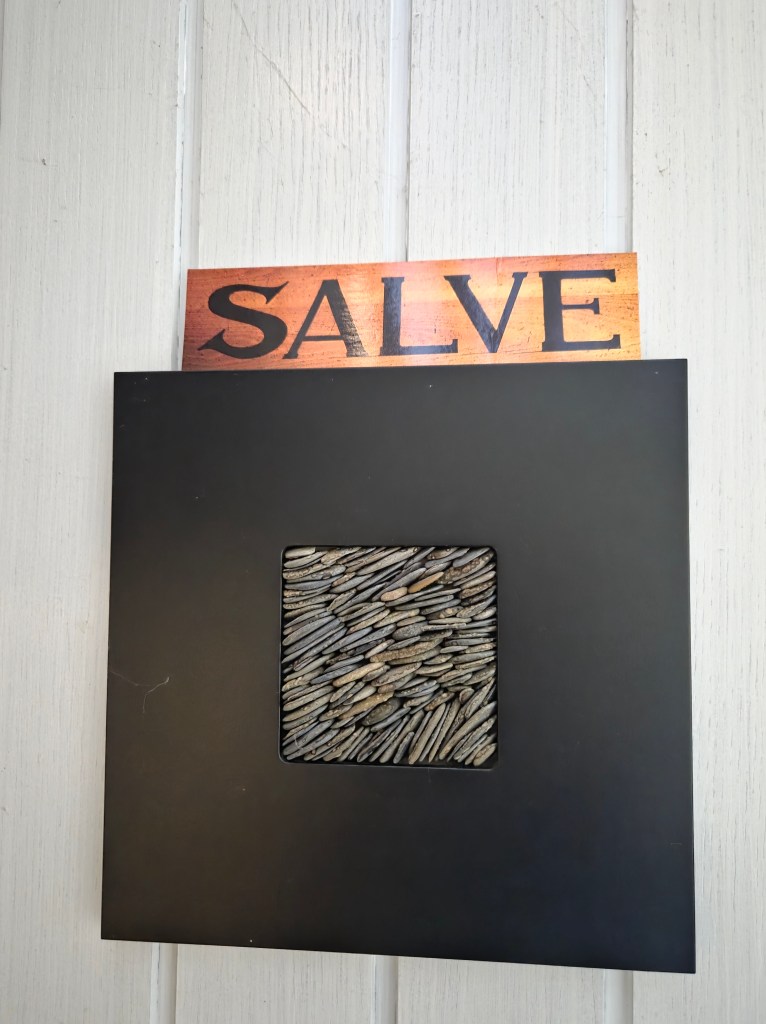
This season of Lent, and looking ahead to Easter, amid the much that we all contend with, maybe we can pause a bit, slow down enough to think about how we go about seeing things. Perhaps we will discard inferior lenses. Perhaps we will ask for this heavenly salve and begin to see afresh. For myself, I hope so. A familiar view dissolving before my eyes can help me to see things differently. May it be as in the words of George MacDonald in Diary of an Old Soul, “Faith opens all the windows to God’s wind.”
Thanks for reading, for listening.
You can order your copy of Letters to Annie at Amazon, FriesenPress, or through your local bookstore.
Sign up to receive my blogs at https://monikahilder.com/
Follow me on Social Media:
Watch for my June blog: “Sweet Pleasures.”
 Monika Hilder