
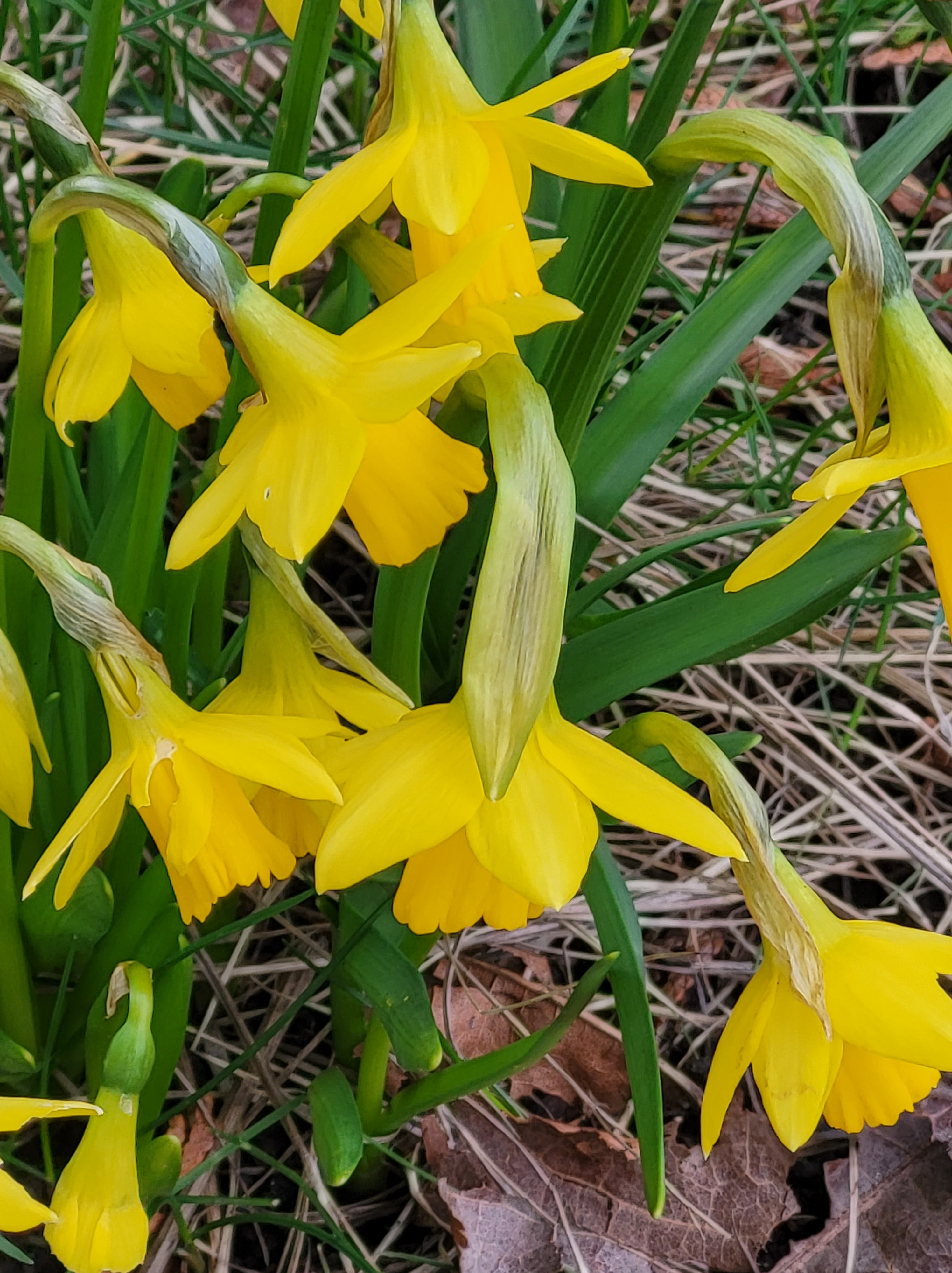
 The phrase, “And Daffadillies fill their cups with tears,” from John Milton’s elegy “Lycidas” lingers in my mind as only a sorrowing beauty-filled thought can. Daffadillies, daffadillies—what lovely sounds to have roll off the tongue. Such beauty, and yet, yes, with such beauty, tears. Whole cups of tears, tears to overflowing.
When I read this poem with my students in the dark days of last November, this phrase stood out to me as one that I needed to contemplate. Milton wrote this elegy, considered the greatest of English elegies, on the occasion of the death by drowning of a fellow student and poet at Cambridge, Edward King, at age 25, referred to by the classical name Lycidas. So young, so much talent, so much life lost to the world. And for me, in November gloom, and now in the grey days of early spring, this line, “Daffadillies fill their cups with tears,” so very gently speaks of the deep pain that comes to this beautiful world. I think in particular of the acute sufferings brought on through war and terrorism, and so this blog is dedicated to all who have suffered significant trauma in the past year, whether through war or terrorism, or through other forms of acute grief.
We properly speak of post-traumatic stress disorder (PTSD), but what of the ongoing traumatic-stress-disorder? Whether over past or ongoing stress, words can fail. . . . And sometimes words ought to fail. Sometimes words that come too easily to the lips should lose themselves in silence. Silence is surely needed as people live out terrible events, moment by moment, in memory and in real time. And those of us who are once or several times removed from PTSD, surely need deep silence for reflection, for prayer. The quick-and-easy at-a-distance armchair comments, as if we had full understanding and even greater intelligence, should stop. And then perhaps we can better enter into the empathy needed in order to mourn with those who mourn, as the Good Book says.
For me in these past months, the phrase “Daffadillies fill their cups with tears” has served as a starting point, a pause in the torrent of terrible events that have deepened grief in me. Milton’s phrase invites me to enter into a quieter place. Here I can a little bit better embrace the beauty of this world in deep pain. As these daffadillies whisper to me of beauteous spring, their cups filling with tears, they point me to the Lenten hope. Trauma does not have the final word.
As we travel through these Lenten lands, we might consider the epitaph that C. S. Lewis wrote for the tombstone of his wife Joy Davidman: 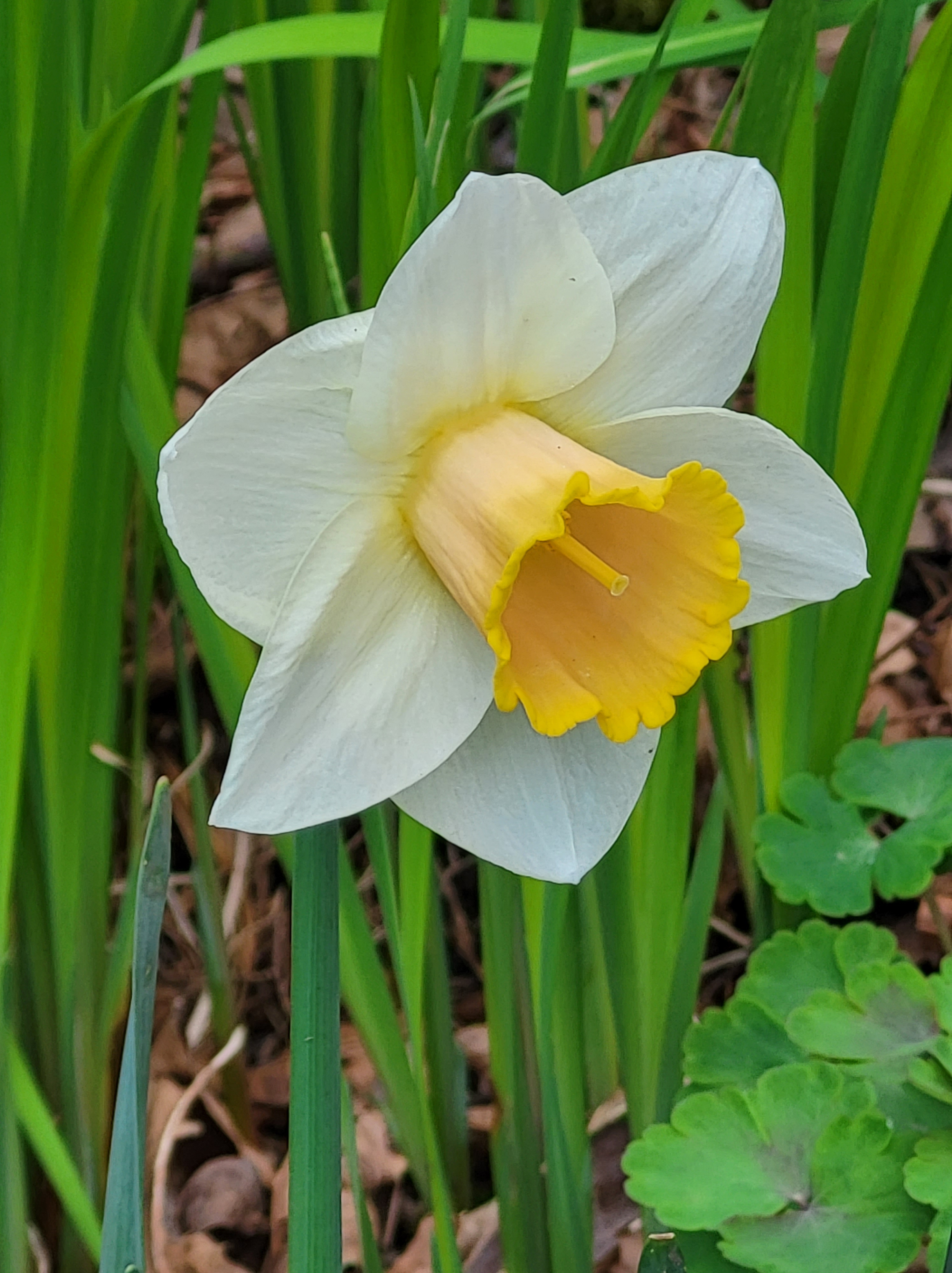
“Here the whole world (stars, water, air,
And field, and forest, as they were
Reflected in a single mind)
Like cast off clothes was left behind
In ashes, yet with hopes that she,
Re-born from holy poverty,
In lenten lands, hereafter may
Resume them on her Easter Day.”
With this poem he captures the ashes of our earthly pilgrimage—the sorrows of our brief days ultimately leading to death. We might think of the ashes on the first day of the Lenten season—the custom on Ash Wednesday of making the sign of the cross with ashes on our foreheads—how these ashes speak to us of our mortality, of our need for repentance and for affirmation of faith. With ashes, too, we are better reminded of Christ’s suffering unto death for our sakes: the Beautiful One, the Man of Sorrows. Through these Lenten lands that we travel—and how closely the word “travel” is to the word “travail”—we labour, we journey, in what Lewis called “holy poverty.”
Holy poverty? What a phrase. How might poverty be holy?
I guess poverty can only become holy through the One who took on human poverty, the whole load of it, and in His body let it be nailed to the cross. So that we, after Him, will take up full life, life eternal, on our Easter Day.
This season, as daffadillies whisper to me of spring, and their fragile blossom-cups fill with rain, they haunt me with the beauty-filled melancholy of Lent. It is a good haunting, I think. I hope it is a holy haunting as I, in my own way, meditate on the traumas of others. And in this, in my own way, and with others, I look to the one true Hope of the world: the Christ.
Milton’s poem “Lycidas” ends with some of these closing lines:
 “Weep no more . . . weep no more,
For Lycidas your sorrow is not dead,
Sunk though he be beneath the wat’ry floor,
So sinks the day-star in the Ocean bed,
And yet anon repairs his drooping head . . .
So Lycidas, sunk low, but mounted high,
Through the dear might of him that walk’d the waves . . .
. . . hears the unexpressive nuptial Song,
In the blest Kingdoms meek of joy and love,
There entertain him all the Saints above . . .
And wipe the tears for ever from his eyes.”
Here Milton echoes the ultimate hope that whose who sow in tears will reap in everlasting joy. I wish you a blessed Lenten season and joyous Easter!
Thanks for reading, for listening. 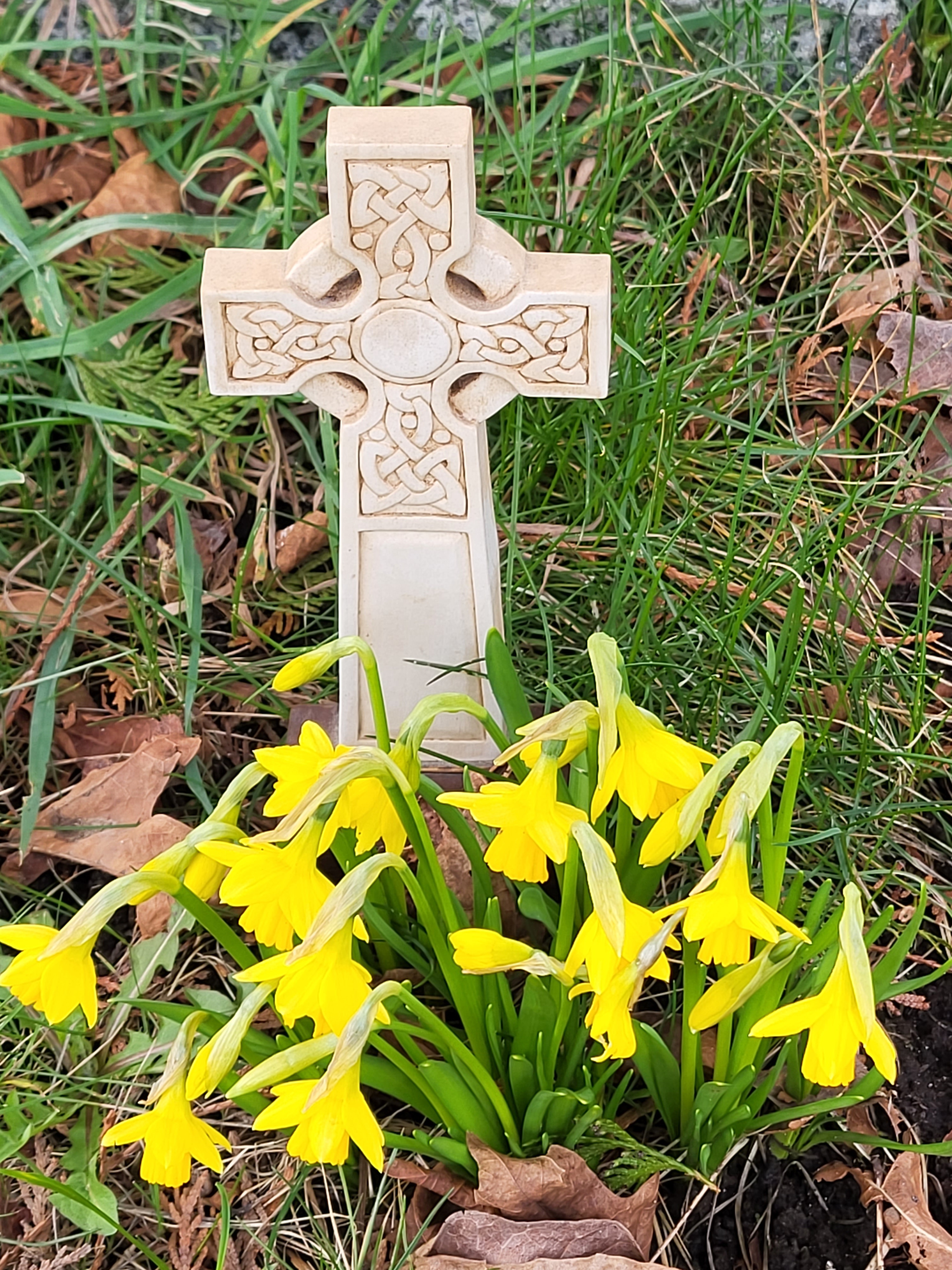
You can order your copy of Letters to Annie at Amazon, FriesenPress, or through your local bookstore.
Sign up to receive my blogs at https://monikahilder.com/
Follow me on Social Media:
Watch for my summer blog in June: “Joy is the serious business of Heaven.”
 This would explain why the Canadian poet Al Purdy’s poem “A Handful of Earth” resonates with me. He writes,


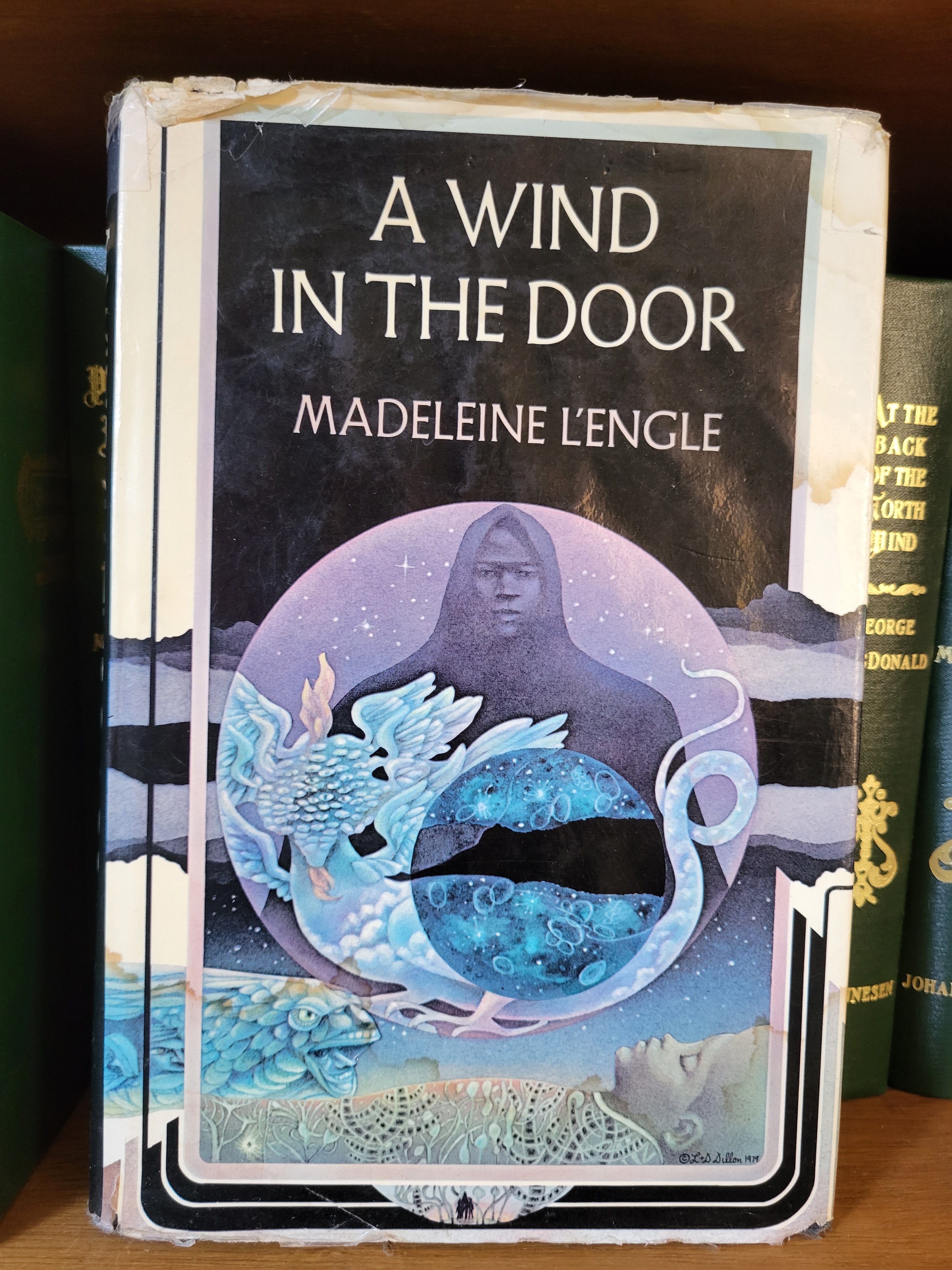 Then he adds with a laugh, “My dears, you must not take yourselves so seriously. Why should school be easy for Charles Wallace?” Taken out of the context of the story, Blajeny’s response might seem uncaring, even cold, and possibly dangerous. But it’s clear in the story that this is not the case. The fact is that Blajeny cannot make Charles Wallace’s problem disappear. There is no magic wand. But Charles Wallace is learning to adapt and defend himself, and the once ineffective school principal Mr. Jenkins grows in moral character to the point where he looks forward to dealing with the problems in his schoolhouse. Unlike Meg’s small view of what this Teacher’s purpose is, Blajeny has arrived for the far greater reason of guiding his students into discovering the nature of their battle against evil, and therefore for strengthening their readiness to meet it.
 Now that school or college and university has begun for many of us, I am left pondering Blajeny’s core challenge again: “Why should school be easy?” If I vote for “easy,” what am I looking for and, if I got it, would that be good? If I vote for “hard,” what should that be and why might that be better? Obviously, these questions can take us in several directions—the topic is that important. But for today I’d like to focus on Blajeny’s challenge: school should not be easy.
 In his essay “Learning in War-time,” C. S. Lewis compares the educated person to the well-travelled one. He writes, “A man who has lived in many places is not likely to be deceived by the local errors of his native village: the scholar has lived in many times and is therefore in some degree immune from the great cataract of nonsense that pours from the press and the microphone of his own age.” Lewis, like others, was worried about the outcome of modern education based on moral relativism. Unlike the old idea of education founded on objective moral truth which is the basis for our freedom and intrinsic human worth, summed up nicely in the phrase “Veritas, Libertas, Humanitas”— Latin for “Truth, Liberty, Humanity”—a modern idea of education founded on moral relativism is the soil for enslavement and dehumanization. Lewis argues that moral relativism not only leads to inferior learning but opens the door to elite controllers who will work to reshape the masses to conform, and so enslave, to the agenda of their era. (See his book
  .) Does this sound like an overly harsh judgment on much of modern education? Maybe, or maybe not?


 The everlasting country where the old are young again and where it is impossible to experience fatigue, fear, or sorrow. Where all is well again, where the best of each country lives, and where our stories will truly begin. With others, I long for this Great Beginning, the New Day. Meanwhile, with others, I cherish memories and glimpse new pictures of summer that warm my heart:

 And on some magical late May or early June evening, when at the 49th parallel the setting sun in the northwest shines with elvish beauty through the leafy green just so, there the blue irises at the entrance to our herb garden reign supreme. Shining sentries, serene, in salute to every good thing.
 They testify of family—past, present, and future—planted on the soil of good fatherhood (and motherhood). They signal Heavenly Joy, cheering us on. Danke, Papa, danke.
 and caring for his family, friends, younger ones he mentored, and others all his days. In track and field, he loved the 100 meter dash best. But in life, I’d say he was the long distance runner. You could see that he had his eye on the goal, and in his heart what mattered most in this life and for all eternity. Dad embodied what it means to be faithful to God and good to man. I owe him (and my dear mother) much, much, much.
 and because, first and foremost, we have Our Father, who art in Heaven. . . . Every image of good fatherhood is a reflection of The Heavenly Father’s heart. In the words that have been attributed to George MacDonald, that I can’t now locate, “This is and has been the Father’s work from the beginning–to bring us into the home of his heart.”
 You can order your copy of
  If you have more than one hometown, or maybe even had to flee yours, what stands out for you? What special things has your hometown blessed you with (even the unpleasant or very hard things) that have shaped you?
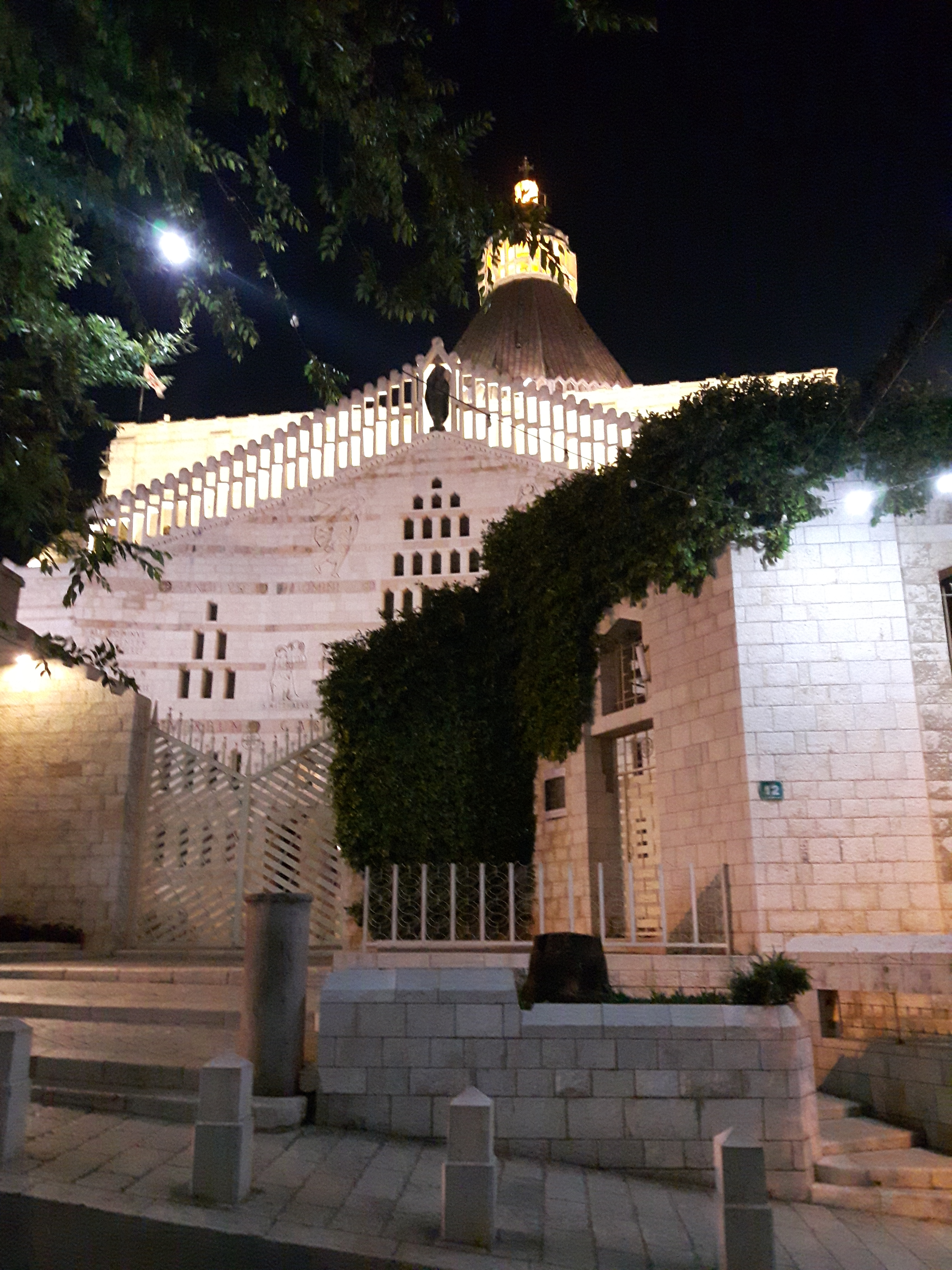
 A lot of people move here but some of us get to be born here (sorry, yeah, that’s the ingrained Vancouver pride, or snobbery—take your pick—we never seem to get over it). The mountains, the ocean, the forests—well, it’s a supremely beautiful setting. Even the coastal rain is worth it, we say (most times)—liquid sunshine, right? After a long journey from the Old World in the wake of war trauma, this lovely city-by-the-sea is where my family planted their flag.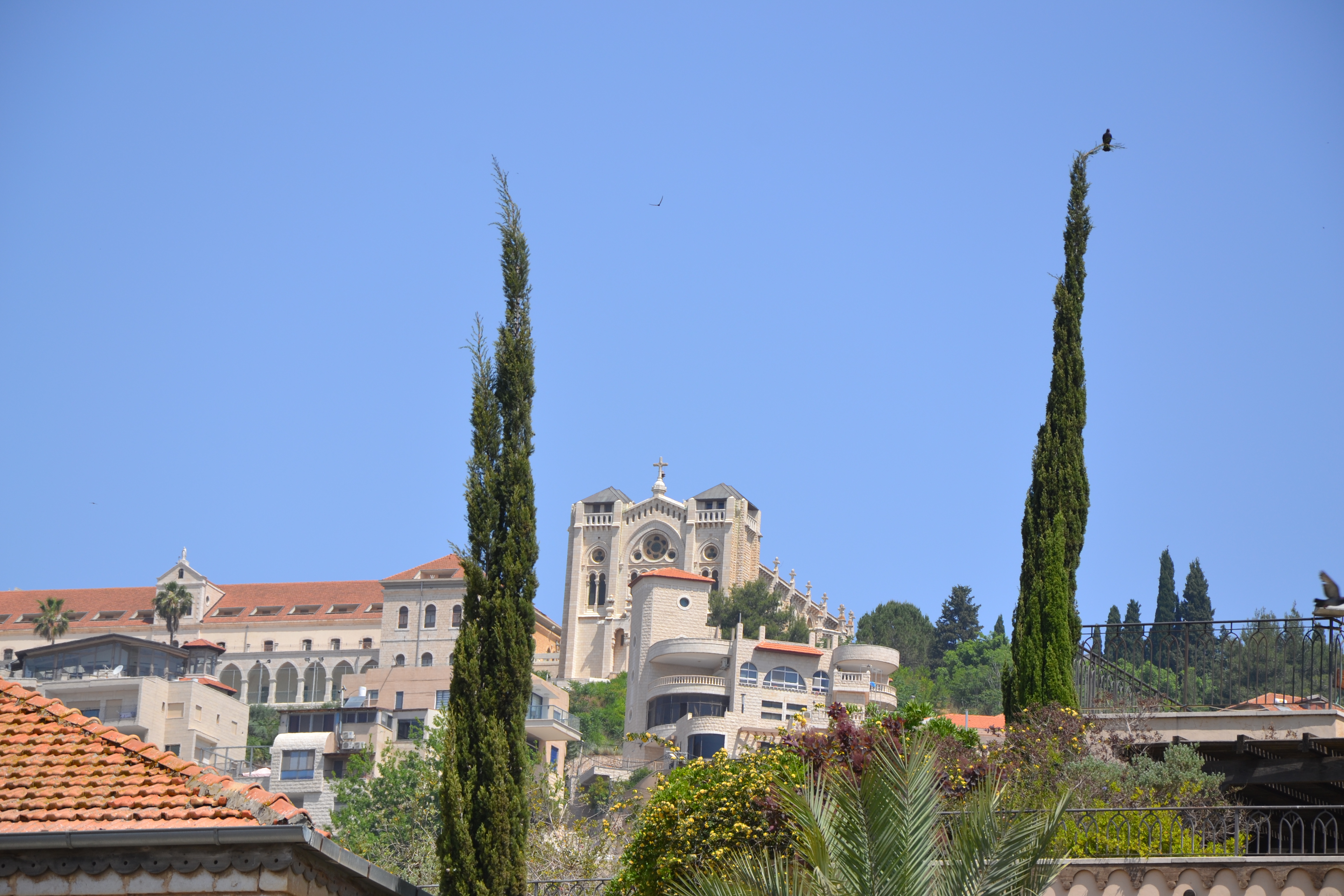






 Thanks for reading, for listening!
 Or is all grief horrid, unholy, the pain we cannot welcome? Then again, is holy grief the only kind of grief, the right kind—the other kind of grief is . . . is what? Can someone tell me what unholy grief would be? I have my moments when the thought that any kind of grief could be thought unholy startles me, even strikes me as wrong.
 As the well-worn cover of my copy of C. S. Lewis’s The Problem of Pain testifies to, besides the Psalms, the Book of Job, Lamentations, and other books in the Bible, this is one of my go-to books when it comes to grief. I go to The Problem of Pain because its author gives no pat answers, no quick consolatory phrases, nothing that minimizes one’s experience. And I go to this book because the author openly declares his own inadequacy for addressing the subject. (When empathy seems lacking, “good advice” feels empty, even rude, doesn’t it?) In his Preface Lewis speaks of the irony of him having written a book on this subject. The disconnect between what he believed about pain and what he felt about pain was such that he wished that he could have published the book anonymously. To which his editor responded that he could explain to readers that he “did not live up to [his] own principles!” While Lewis was willing to speak to the intellectual problem of pain for about 140 pages, he didn’t for a moment feel qualified to teach the necessary “fortitude and patience” when facing pain—and this is what makes him such an authentic fellow pilgrim to have at your side. I applaud his words here: “. . . nor have I anything to offer my readers except my conviction that when pain is to be borne, a little courage helps more than much knowledge, a little human sympathy more than much courage, and the least tincture of the love of God more than all.”
 My own grief over the passing of our colleague Chris resulted in the essay, “A Holy Grief: The Pilgrim’s Path to Consolation.” The essay begins like this:
 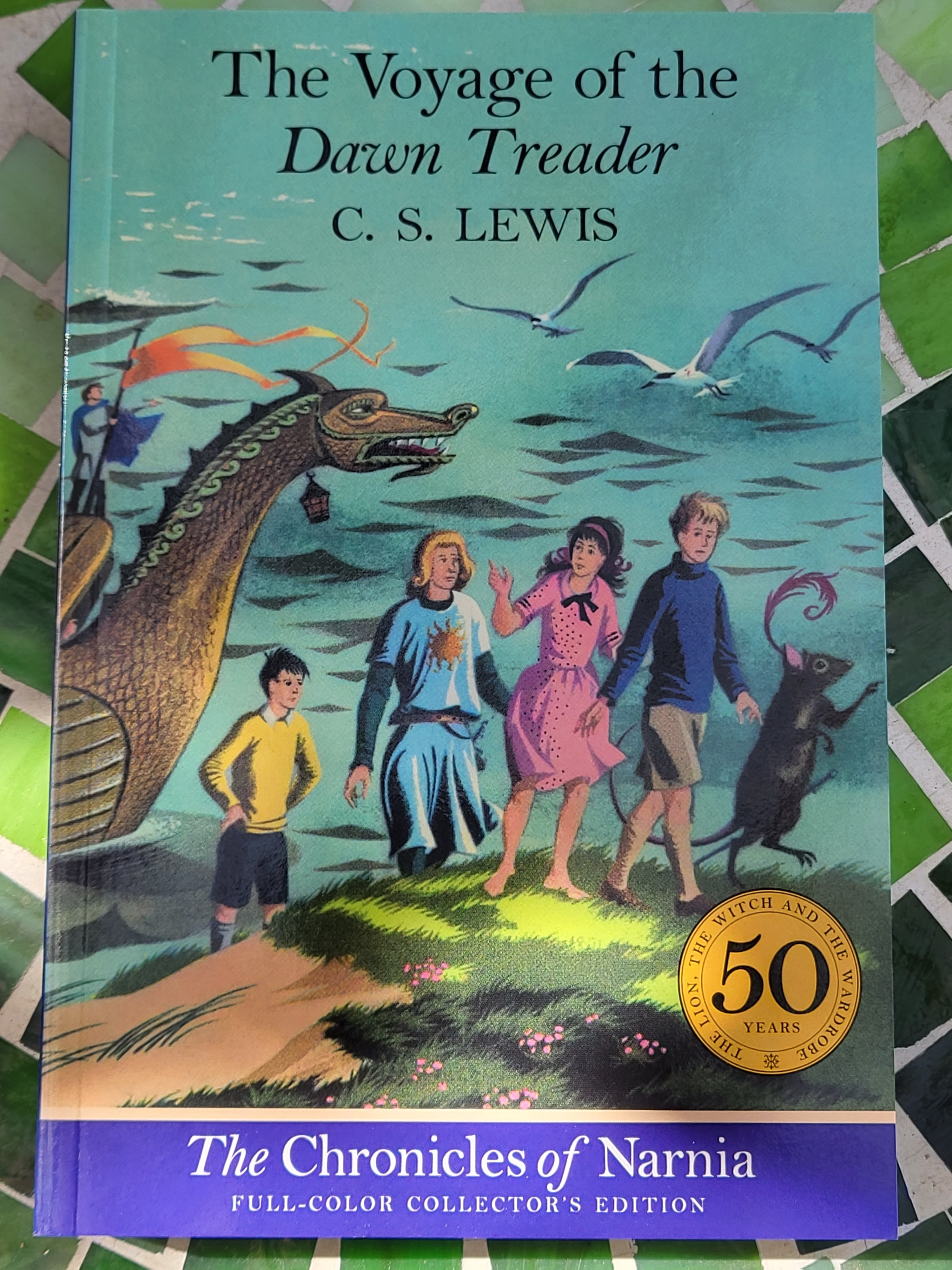 Extreme angst, even despair, looms before each one. But Lucy responds to fear with prayer, and little by little, while the darkness is just as thick as ever, she begins to feel a bit better. Then the light grows, the albatross in a voice that sounds like Aslan’s whispers, “Courage, dear heart,” and after a while they are once again in full sunlight. Once again it is clear that Heaven is the one true help. Fear, even debilitating fear, is real, but does not have the final say when we exercise the faintest glimmer of hope—or, as in this case, someone else exercises it on everyone’s behalf. To stick with the boating metaphor,
 I’d like to draw your attention to a marvellous reflection featuring our
  and green stems make bold promises to become daffodils and tulips in the coming weeks. But the days are often grey, and a surprise snowfall, rare, is almost, dare I say it, fun? Be careful what you wish for! I will say this: it’s certainly brighter.
 that invite greater numbers of eagles to soar on the updraft and flocks of smaller birds to huddle together as they ride the waves in community. Glide, ride–this is how to take in stormier weather. Perhaps the shorebirds can teach me a thing or two about beauty in the waiting.
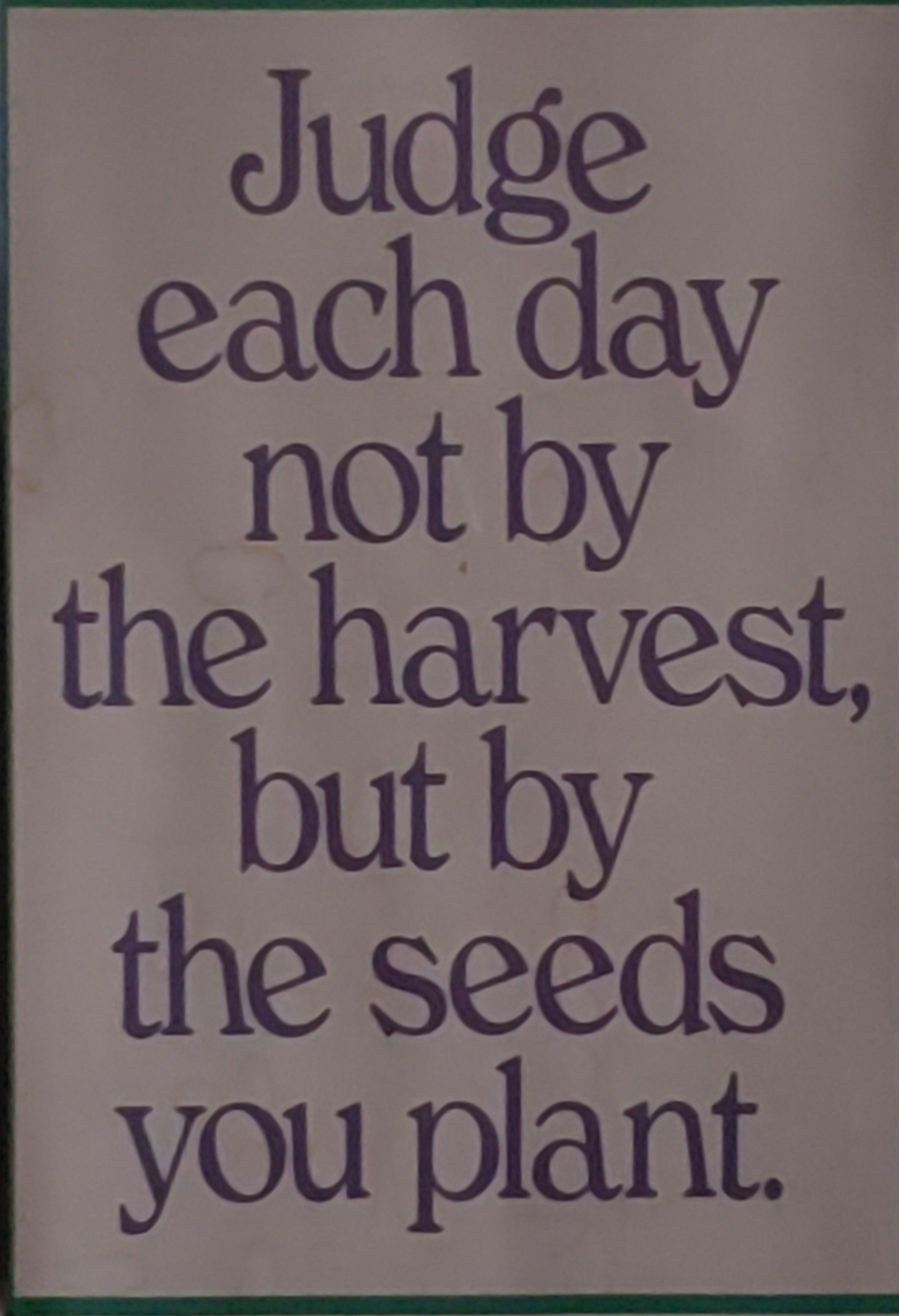 Absolutely: “Even youths grow tired and weary. . . .” And beware: with this season of fatigue they say the rates of depression and anxiety peak. Then, in these last couple of years especially, how often have you heard people say, “Everyone is so tired, so tired.” How often have you noticed a kind of exhaustion, physical and otherwise, in yourself and others? So, yeah, spring fatigue is a thing—and then some with cumulating fatigue.
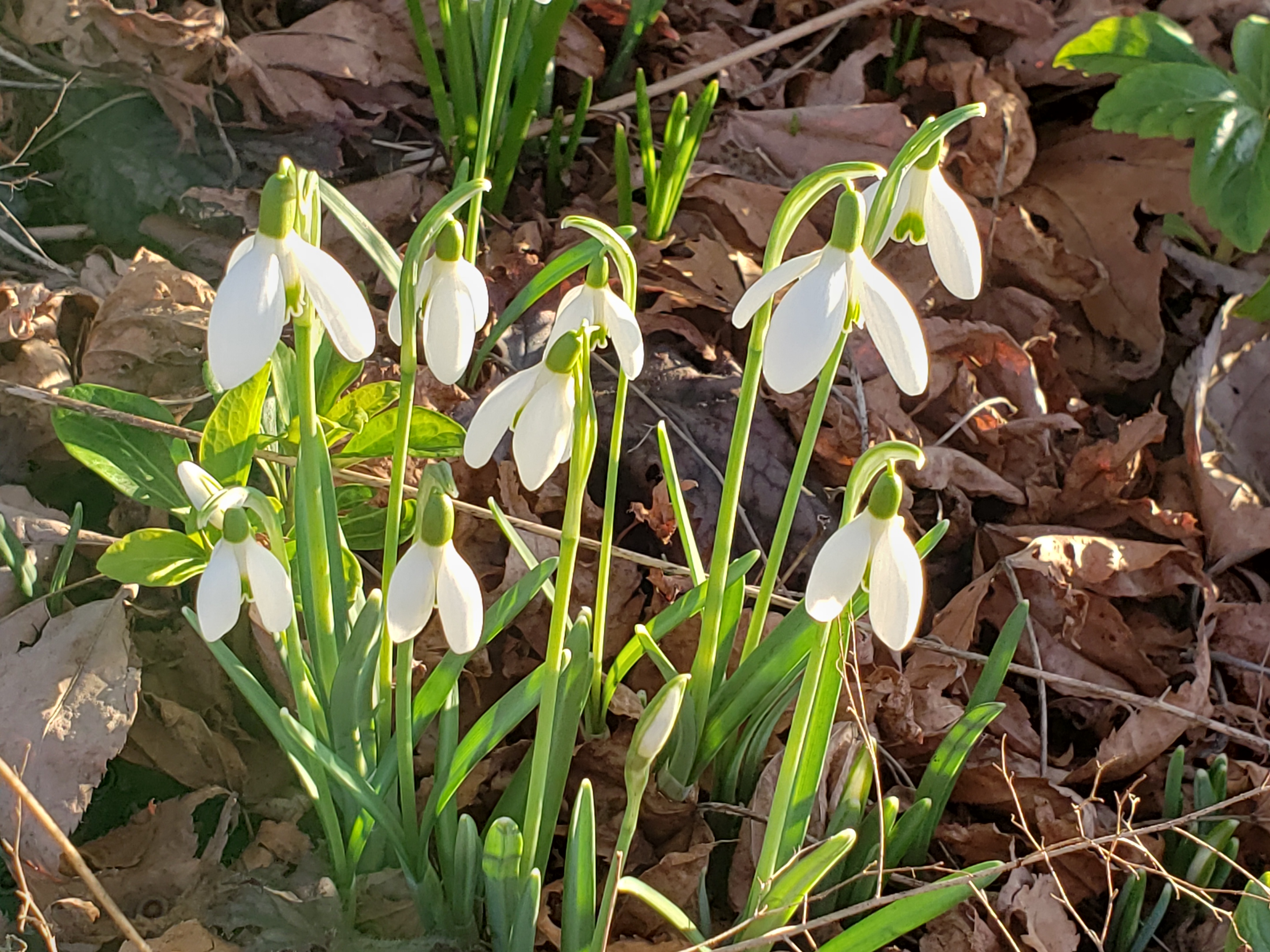 In our world where dark forces flex their muscles, where natural disasters shake the planet, having something of this “passion of patience” seems to be the best response. So maybe let’s consider enduring seasonal fatigue with this kind of patience that is not exactly lethargy (or not lethargy at all, regardless of our tiredness) but is carried by a distinctive energy—not enormous energy, not yet anyway, but a quiet willingness to expect energy to revive us. Then we can venture to face fatigue in a quiet hope. Instead of succumbing to depression and anxiety, we might journey along in the expectation of hope that is yet to be fulfilled. And with such a quiet hope in the not-yet-but-still-to-be comes the faint stirrings of surprising joy.
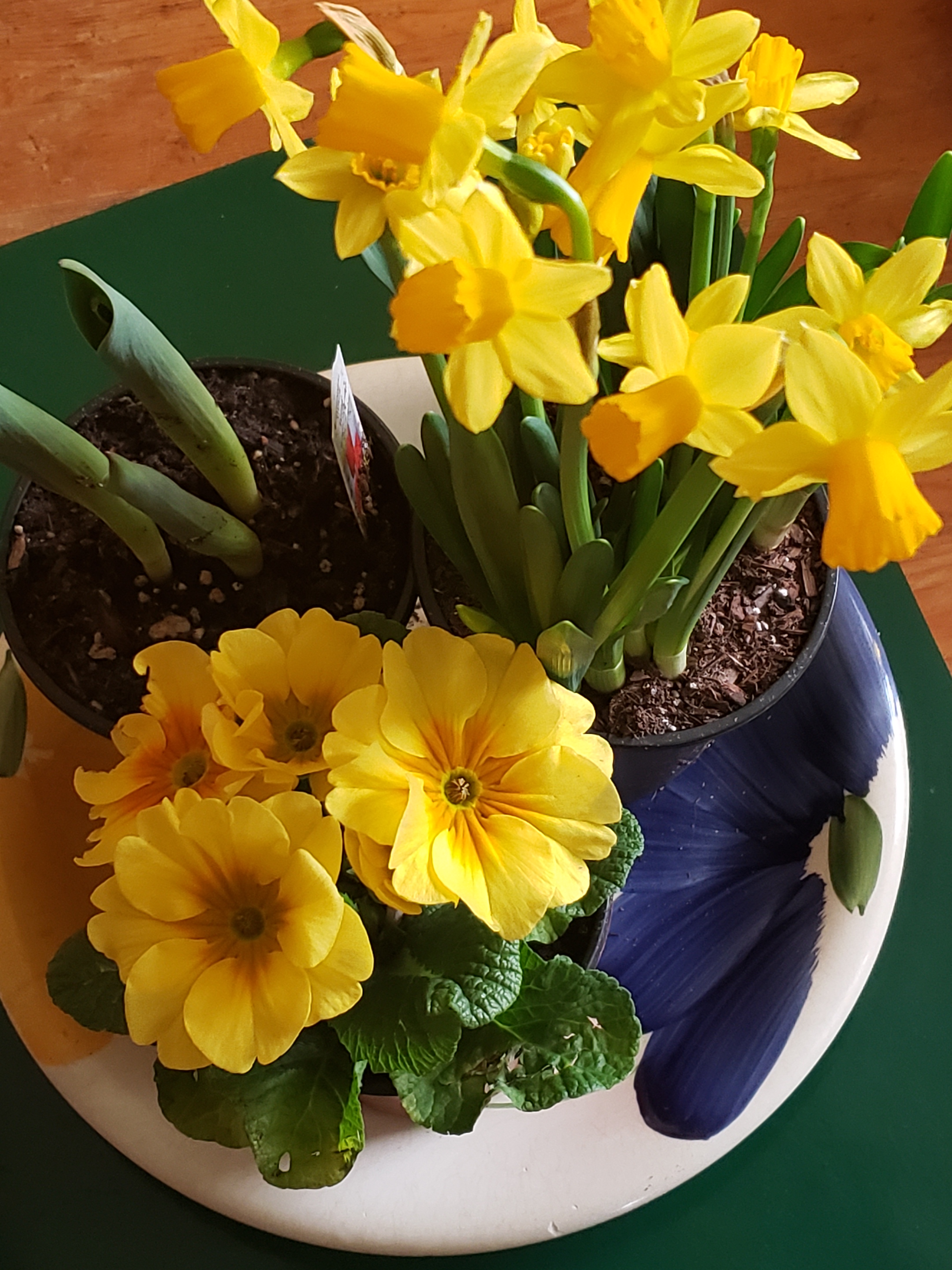 me. And, last but not least, let’s allow ourselves to rest, to pace ourselves. We have it on the best authority: take one day at a time (Matthew 6:34).
 Early February has me eyeing my heart-shaped cake pans and wondering if a fluffy white angel food cake baked with coloured sprinkles and, naturally, adorned with pink icing, will crown the evening. And what about heart-shaped cookies again? My sweet tooth still delights in cinnamon hearts.
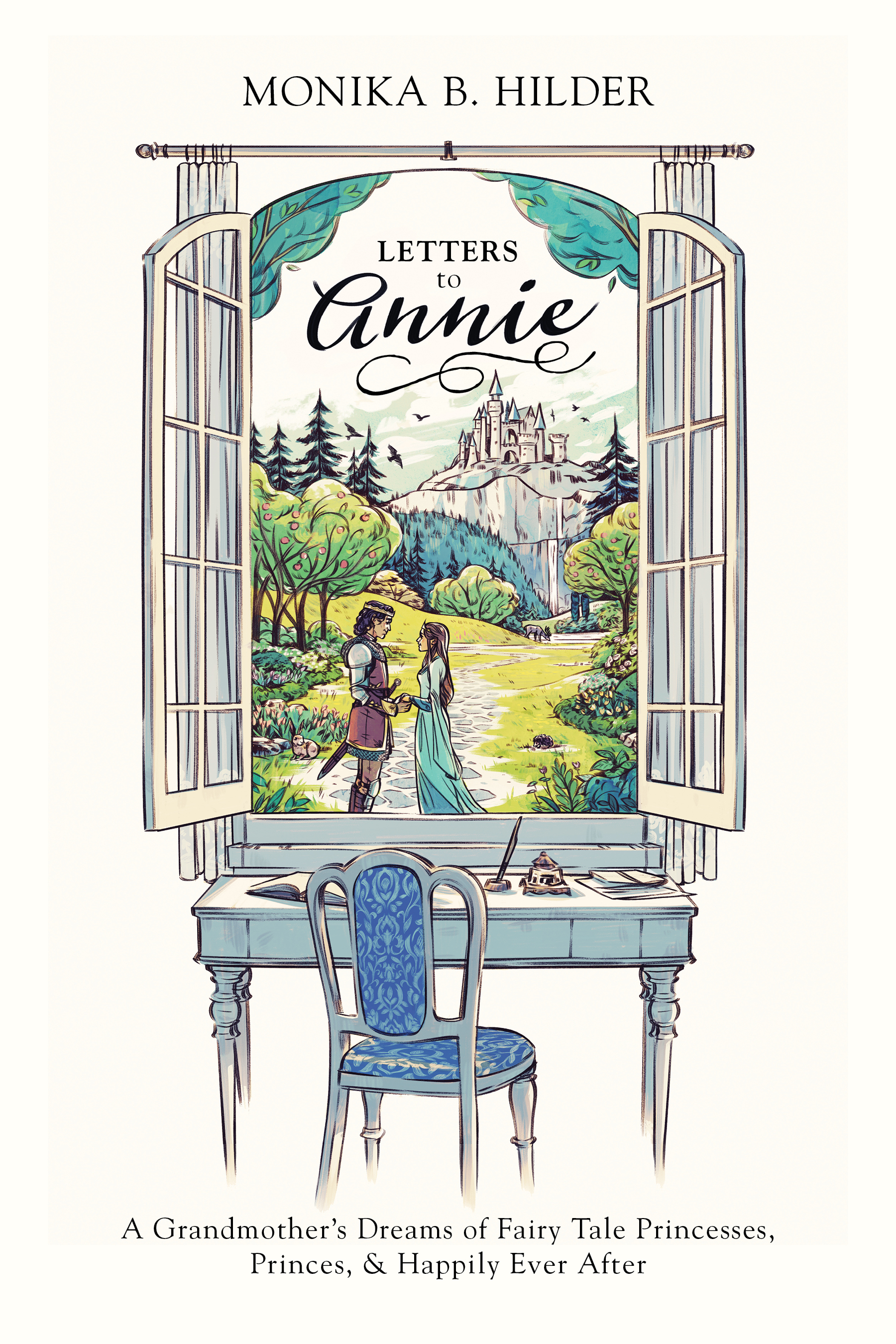 I explore the wealth that fairy tales offer for our life’s journey, and also consider the ways in which we might misread them. It’s written for anyone who loves fairy tales but also has questions and concerns over them. Are they good? Or are they bad? Do we even need them? And just what is “happily ever after”? In this book I follow the story of a grandmother writing to her granddaughter Annie for the first twenty-five years of her life in which they explore these treasured stories. Rather than giving readers false expectations of life, how do these stories leave us richer and more able to navigate the challenges, sorrows, and joys of life with wisdom, courage, and love?
 This Valentine’s Day—and indeed, this month of February, being heart month—my hope for myself and my readers is that we can ponder the ways in which we can celebrate love. Maybe consider how our lives might become like a love letter to others. Think more about the different human loves—affection, friendship, romantic love—and like C. S. Lewis in The Four Loves, ponder that in our brokenness each of the human loves must become transformed by the fourth love, God’s love, charity, in order to become ever more true. It’s a journey.
 January: A new number on the calendar, another opportunity for those New Year’s resolutions. But sometimes the December festivities leave us a tad tired (and that’s a polite way of putting it). Maybe the Christmas tree is still up. If Christmas was a good season, it really is a sweet reminder, too precious to take down quickly. (I don’t understand those Christmas tree burnings that are scheduled even before Epiphany, January 6, the coming of the magi, when in some traditions Christmas is celebrated. February, is it, the right time to consider taking down the tree?) The tree needles still look pretty good, right? Even though we’re after solstice, the lights and decorations console during these dark days. Perhaps keeping the tree up a little longer acts as a bit of a safeguard against the midwinter blues that could be just around the corner—maybe. Couldn’t hurt.
 But in this state, where we presumably do not lie to ourselves about our unpleasant feelings, neither do we get closer to love. Nothing is solved, not yet. Nor are we being terribly truthful, because resentment has the power to become a broken record, replaying over and over, crowding out the fact that our hurt feelings are only one piece of a very big story, a story that could have the most excellent outcome if we would only let Grace have its way with us.
 Only then can we rid ourselves of those toxic thoughts, the clinging resentments. Do it seventy times seven, as Jesus said (Matthew 18:22), meaning without number, every time we need to. Yes, we will need to, again and again. But then maybe we are helped in knowing how seriously we need forgiveness ourselves?
 If you haven’t heard this before, or would just like to hear it again, here’s the link:
  How counter-intuitive to resentment: the humility needed to forgive is in fact “the mightiest sword.” Humility: as T.S. Eliot writes in Four Quartets, “The only wisdom we can hope to acquire / Is the wisdom of humility: humility is endless” (“East Coker,” ll. 97-98).
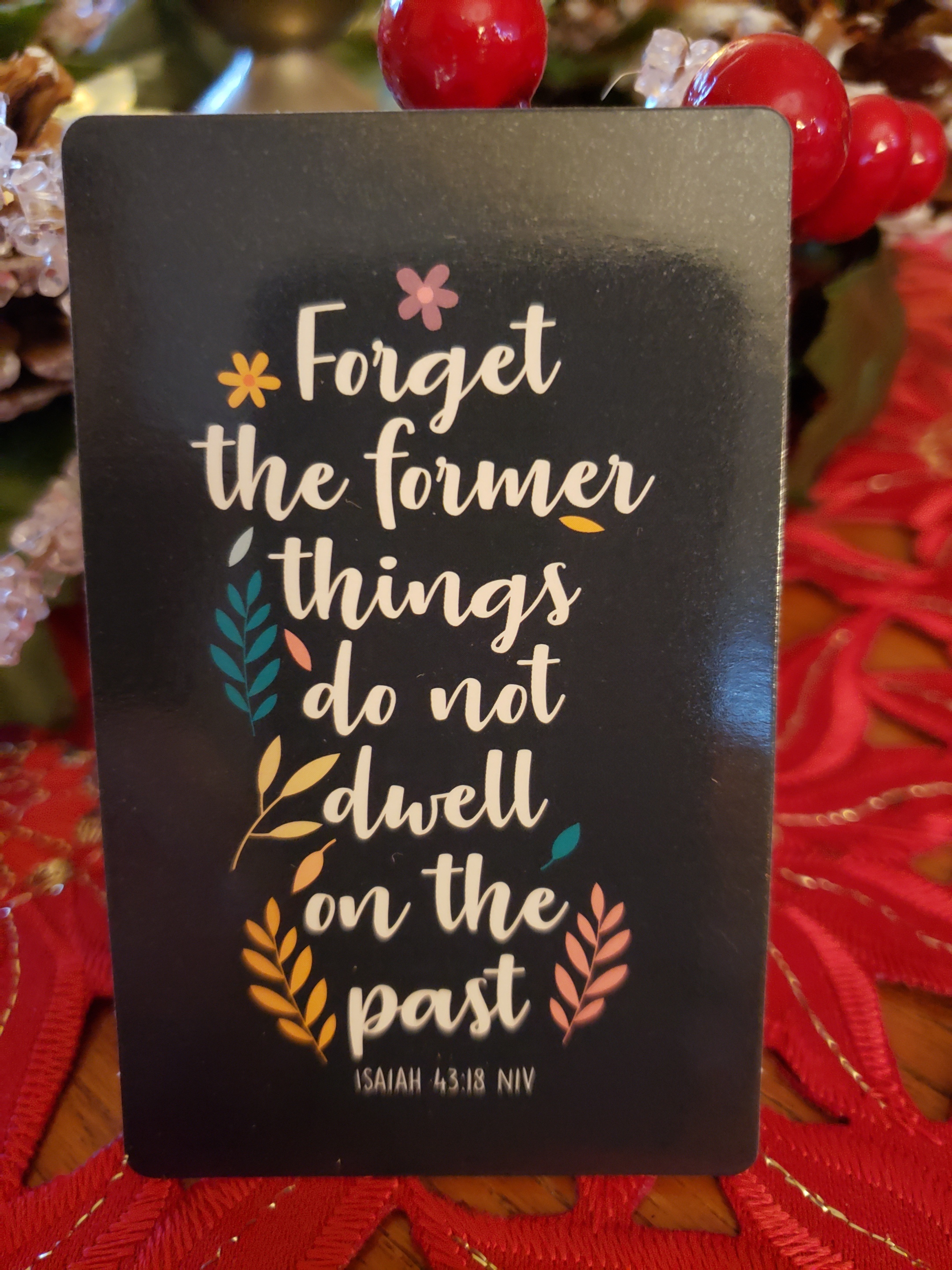 Don’t dwell on the past sorrows because God is doing a new thing, making a way where there formerly was no way, a way that leads to life (Isaiah 43:18-21).
