
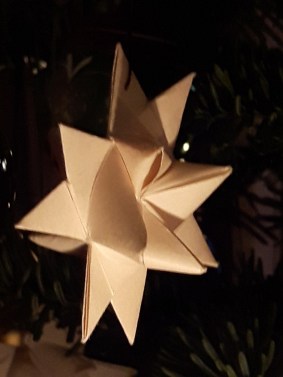
 I come from people who made paper stars for Christmas. They made them in their native Poland, and when their pilgrimage took them to Canada’s West Coast where I was born, they were still making them. And here my parents taught my siblings and me to make them.
The many hours we spent together peacefully folding long strips of white paper into delicate stars are among my happiest getting-ready-for-Christmas memories. Hung from black threads, sometimes red or golden, these white miracles had quiet prominence on our Christmas tree, year after year after year. I say “miracles,” because how can you expect mere strips of paper, even when folded just so, to turn into exquisite kindred spirits of the heavenlies? And that your own hands, guided by your parents’ hands, were part of the developing miracle?
These white paper stars still decorate my Christmas tree, though I really need to make some new ones. A beautiful tradition, these fragile white paper stars made by patient, diligent hands and hopeful hearts.  Their beauty, simple yet elusive, is a testimony to faith and love, to courage in uncertainty, and to lasting goodness. They are a small reminder of the homeland I never knew but have since happily visited, and to the meaning of homeland as we are pilgrims at various stations. They speak to me still of the meaning of Advent and Christmas when we would be making these paper stars.
Advent is a traditional time of anticipation. It’s the time of new beginnings as we head into celebrating the coming of Christ. It can be a quiet time of growing joy. It’s also a time when we might more consciously await the Second Coming of Christ. In the darkness, the light grows brighter.
But we know that this season is often cited as one of the saddest times of year for many people. A time when loneliness is felt more keenly, pain more bitterly. What might the season of Advent and Christmas mean to you this year? Has it been a good year? Do you expect you’ll get together with family and friends—or not? If not, do the bright memories of happier times nourish you, help support you at this time? Or is the pain all the greater?
Last Christmas one of my artistic cousins in Europe sent me another paper star, a different kind that she’d learned to make and was excited to give me. It arrived as a small square shape which I learned to unfold, unfold, unfold, and then secure its extravagant splendour with the attached beads on the string. (Even in the unfolding I needed my cousin’s instructions. I didn’t get it right the first time, no.) And at last, the glorious blue star had its place of honour near the top of our Christmas tree.  A marvel, this shining magnificence made by loving hands and a joyous heart. How its humble quadrangular form held the beginnings of splendour spoke volumes: a sign of family, of homeland in the heart across the globe, and of the meaning of the Christmas miracle wherever we find ourselves to be. Christ has come, and He is coming back. There is no loneliness that He cannot fill, no sorrow that He cannot redeem.
This Christmas season I look forward to hanging up my cousin’s special star again. To thinking upon the new that remembers the old and treasures every good. To pondering how beauty, so fragile, is stronger than we know, and to how humble beginnings, so easily overlooked, grow into brilliance, outlasting many troubles, offering a paean of praise.
This Christmas season I also look forward to good reading. I started by reading C. S. Lewis’s poem “The Nativity” to my students the other day:
Among the oxen (like an ox I’m slow) . . . .
Among the asses (stubborn I as they). . . .
Among the sheep (I like a sheep have strayed)
I watch the manger where my Lord is laid. . . .
I look forward to returning to Katherine Paterson’s collection of short stories, including “Angels and Other Strangers”–stories that take us right into where life can hurt the most, and there find Christ.
With the help of Malcolm Guite and the work of other poets he includes in this collection, including some non-Christians, Waiting on the Word: A poem a day for Advent, Christmas, and Epiphany, I’d like to daily reflect on the ongoing miracle of the Incarnation. Join Malcolm in what he refers to as a counter-cultural, subversive act: instead of skimming over the lines, read them aloud and slowly. I wonder what will happen in that space of inner quietness if I do.
My hope for my readers and me is this: that the quiet signs of Advent and Christmas will fill us anew with joy. And when our emotions waver, and even spell doom, possibly in the very dark straits that we find ourselves in, that we would come awake to the small signs of our true hope.
Advent blessings—and Merry Christmas! 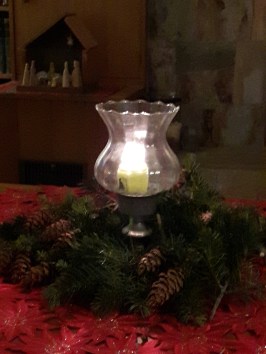
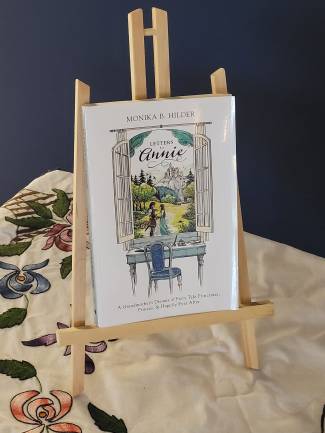
To learn more about making Christmas and other good memories—and what these could mean when the hard times roll in— remember to pick up your copy of Letters to Annie. (see Letter 3)
Order Letters to Annie at FriesenPress, Amazon, or through your local bookstore.
Sign up to receive my blog posts on my website:
Follow me on Social Media:
Watch for my January blog: “Release, Rewire, Renew.”

 Here’s how. The awareness that opportunity doesn’t come around the same way again heightens our sense of the preciousness of our days. Just as C. S. Lewis has said, “There are no ordinary people” (“The Weight of Glory”), we’d have to likewise add, “There are no ordinary days.” Each day is a unique gift, bringing not only its unique challenges but also its unique blessings. Let’s not waste the day on trivia. Let’s guard against toxic ideas, emotions, and actions. In other words, writing toward one’s own death, which is really living toward one’s own death, means we’re more prone to choosing wisely with the result that we’re better able to transform from being static people for whom seemingly little can change to becoming dynamic people who initiate change. We become increasingly present to the moment, and therefore living our lives to the fullest. The awareness of living toward one’s death (with the emphasis on living) acts like a magnifying glass revealing noteworthy details. Or like a crucible in which the various particulars of our lives undergo yet higher pressure, often painful at the time, but resulting in a new creation.
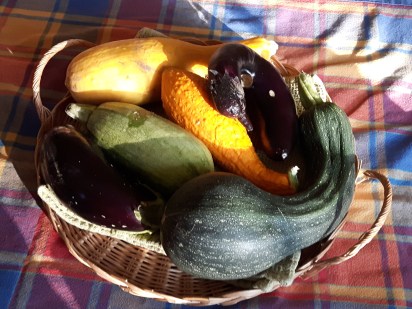 The second Monday in October, or the Sunday preceding it, is the day we try to get together with family and friends to celebrate with turkey and all the trimmings. For our American family and friends, the last Thursday in November is the great day. And autumn brings the biblical Feast of Tabernacles, Sukkot.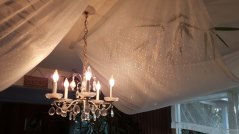
 Gratitude for the music heightens my sense of hearing.
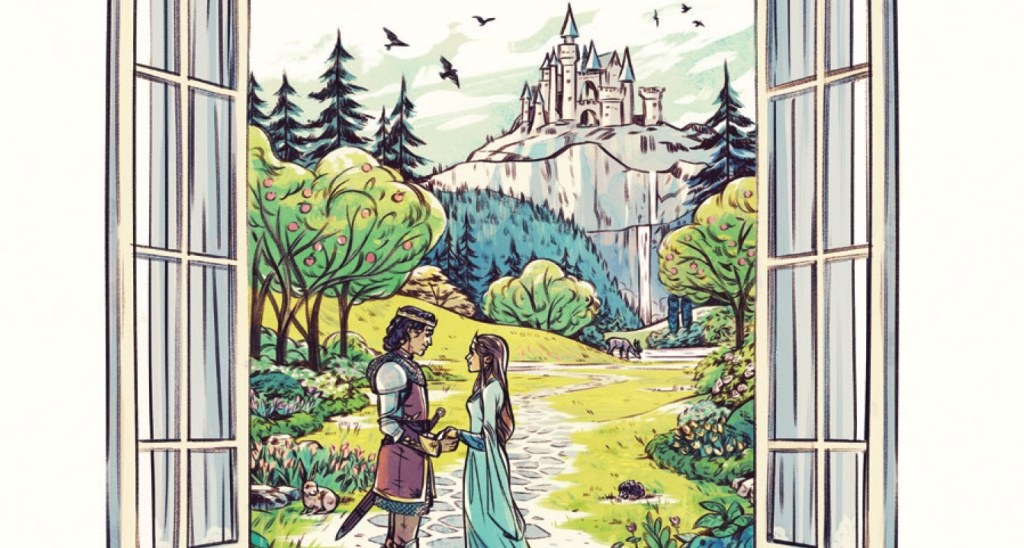
 The best fairy tales teach us that we live in community, and that we are offered countless gifts to help us on our way. Good magic happens through community.
 (This beautiful venue came about through the artistic talent and amazing organization of one dear staff member and her kindly helpers.) Students, colleagues, family, and friends filled the gently lit room overlooking the lake. Family and friends from as far away as California tuned in online. A graduate drove up from Washington State, bringing a bouquet of flowers.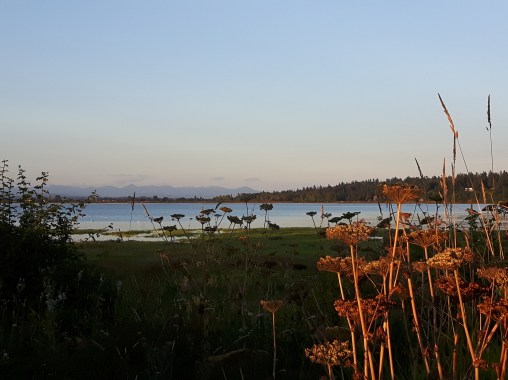
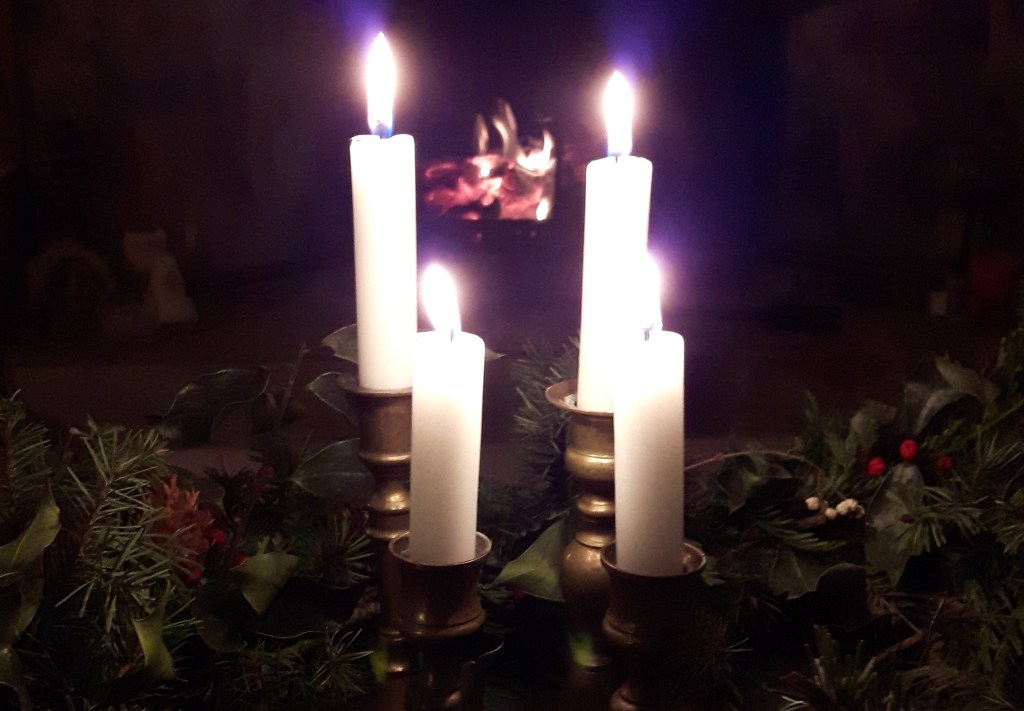
 This Advent, in the midst of my end-of-semester professor’s grading of student papers (all so interesting and worthy), in the aftermath of torrential rains that have recently hammered and flooded parts of my province of British Columbia with a vengeance unimagined by most of us, and just in the midst of a very hurting and divided world, well, I pause to consider a marvellous event that happened last Advent. A space for gratitude. Our Advent miracle. With my wonderful colleagues, Drs. Sara L. Pearson and Laura N. Van Dyke, I co-edited and published a book that saw the light of day this month one year ago! In the midst of many things, the Covid crisis being one of them, this book came to birth in December 2020: The Inklings and Culture: A Harvest of Scholarship from the Inklings Institute of Canada. Twenty-seven chapters from contributors.
 Amen to that. This book, like all good things, took time. If you tend to impatience, like me, then you’ll know all about that jerking at the tether when things don’t happen according to your preferred schedule. The proper unfolding of events in the twin tether of time and space is not quite our favourite idea. But then, oh, glorious, just when you think something is maybe not going to come about at all (because you’re still struggling with impatience, among other rotten things), the miracle happens. The job is done! And you truly know that the energies invested which you thought were yours solo (lone ranger problem), but were mightily infused with the heavenly source of all energy, and then, ta-da! the perfect opening of doors followed—all this birthed the miracle. In hindsight, it happened faster than you could have guessed. (Meanwhile, the naysayers have all vanished, which is what they should have done in the first place—there’s my impatience again. But let’s remember too: naysayers have their place: they can make you stronger and when that happens you get to prove them wrong. Double-bonus. But don’t get too proud about it. Maybe you can’t quite or shouldn’t say, “I told you so.” But you might whisper, “I’m glad I didn’t listen to you, not very much anyway.”) So YAY, the job is done! Big WOW. And you got to have a part in it—how amazing is that! You end up shaking your head, wondering how you got invited into the grand dance. I love how Madeleine L’Engle once said that every book has its own angel, its own perfect time for appearance. (At the moment, I don’t recall whether I heard it in one of her live lectures or read it.)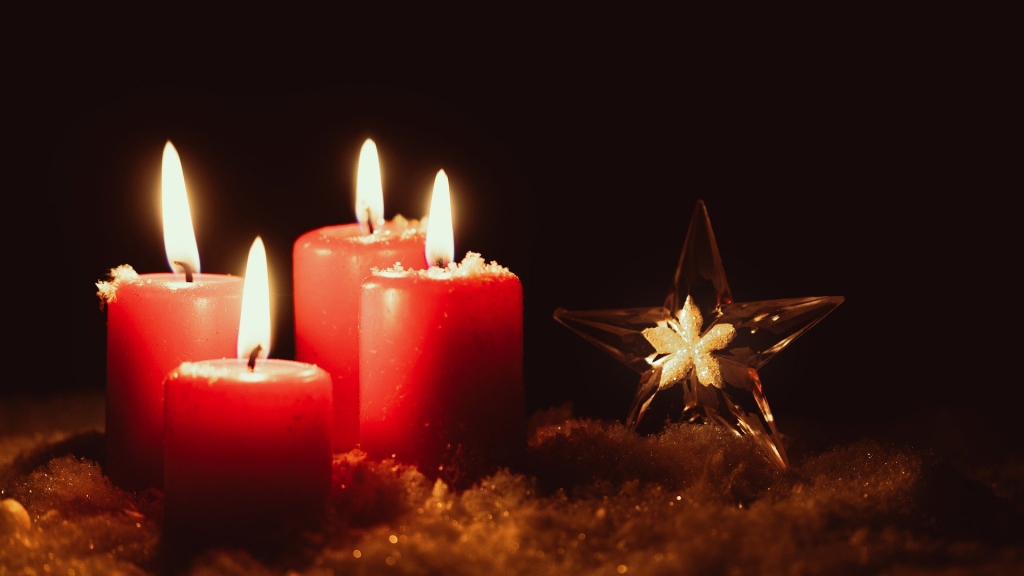
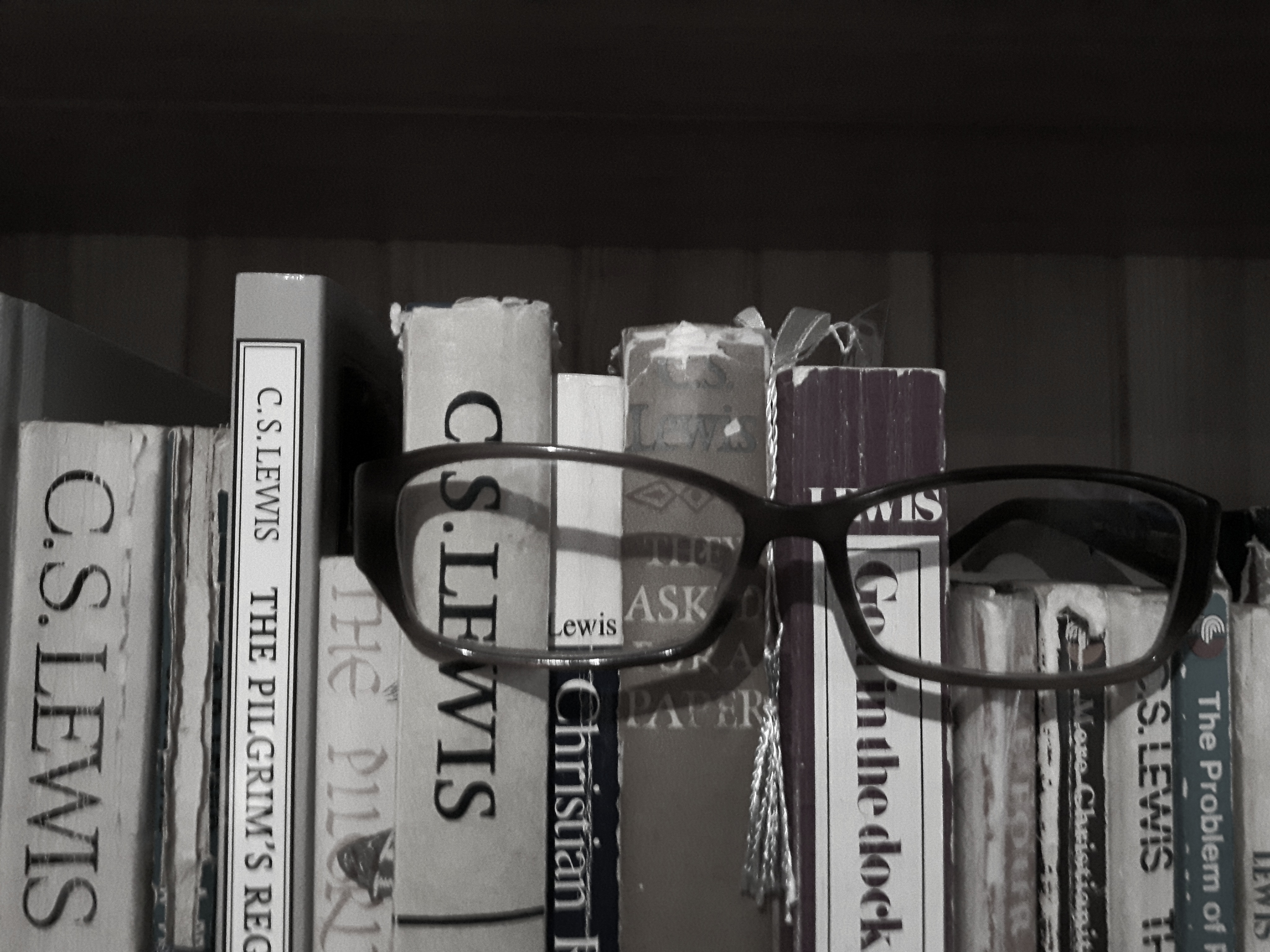 Bifocal vision marks the end of a youthful era. What has this possibly to do with hope? I suppose leaving one’s youth behind can be a kind of good? (Let’s try to count the ways in which loss also leads to gain.)
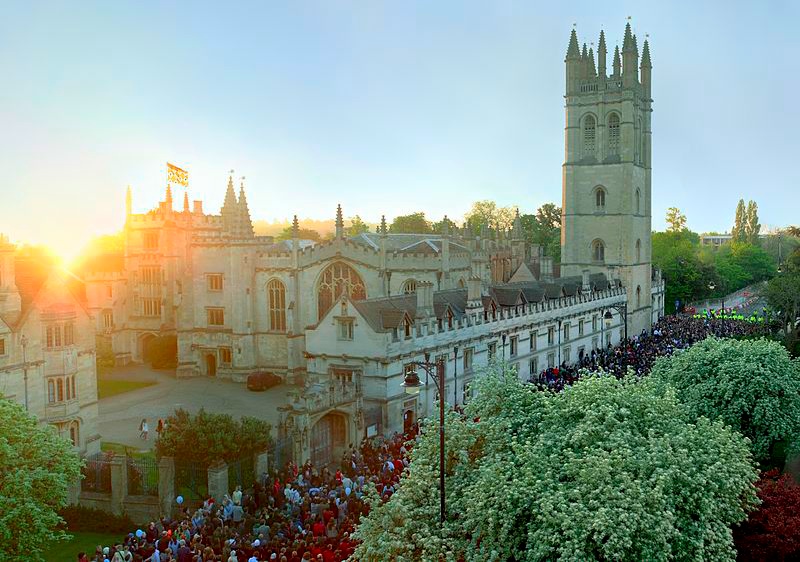
 Stephen was the first person who invited me to give a keynote address. It was for Oxford, at C. S. Lewis’s Magdalen College, no less. What?! Me?! Oh, what a marvelous time it was, that Oxford conference by the George MacDonald Society in 2014. (You can read a lot of what we thought and said in the book, Informing the Inklings: George MacDonald and the Victorian Roots of Modern Fantasy.)
 I have another reason for associating Stephen with bifocal vision. Every time I teach George MacDonald, which is a fair bit, I refer my students to Stephen’s comment on this Victorian author. MacDonald, Stephen said, had “bifocal” vision, meaning that he saw two worlds at once, the temporal and the eternal (“The Two Worlds of George MacDonald”).
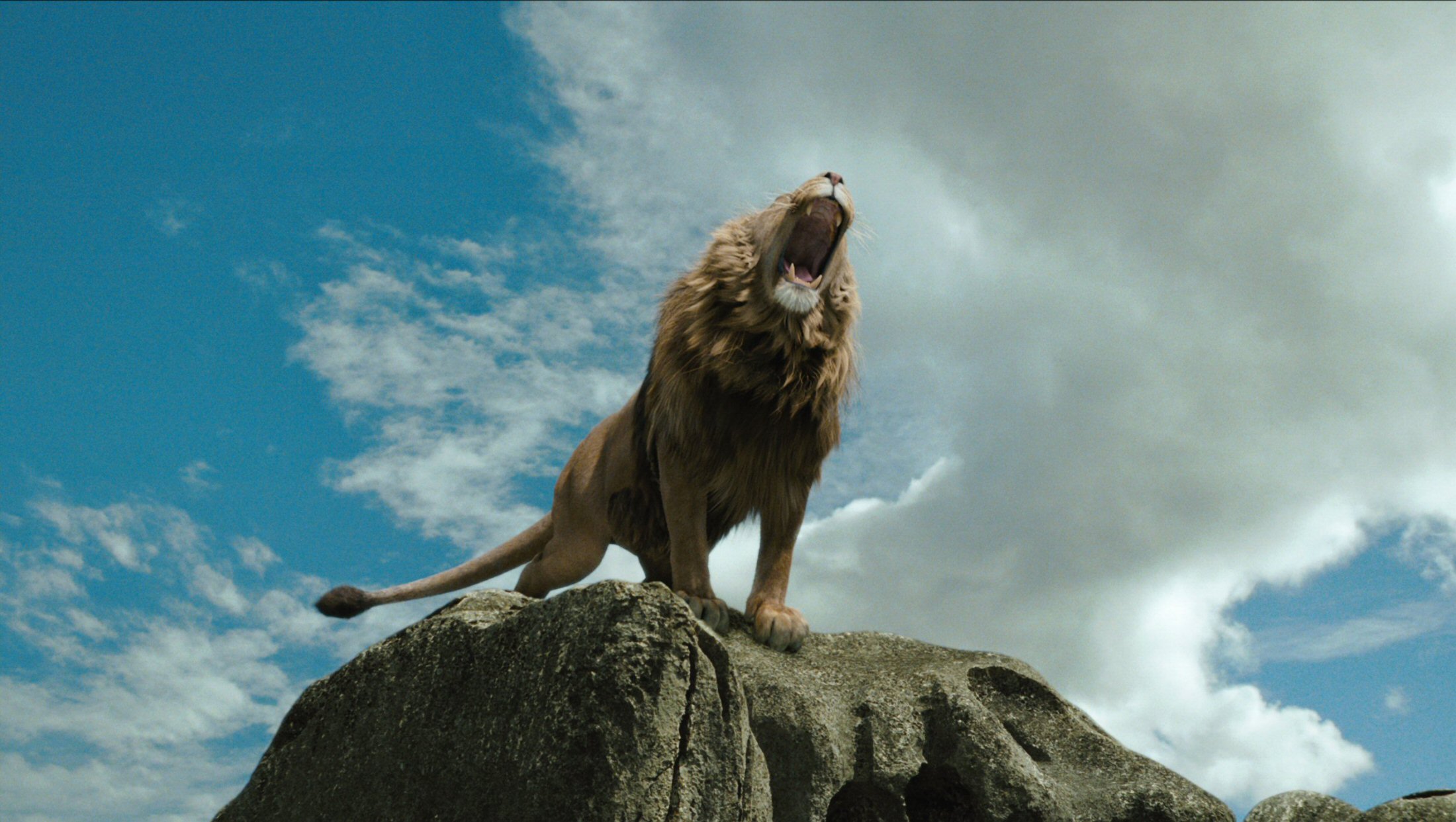 So when I walk darkening wintry streets, I want to remember that the weather will change. Stephen’s comment to us that one night also helps me to remember. Frost for a time but not forever. The Great Thaw is coming. The White Witch’s reign is temporary; Aslan will return. And as I walk along I need to see what’s right in front of me as clearly as possible; but I also need to have the long view of life everlasting. The short and the long view—bifocal vision—enables hope.
 A few evenings ago my immediate family circle celebrated the beginning of Sukkot, the biblical Feast of Tabernacles or Shelters. As we made our preparations, I contemplated again the first time we did so some years ago. I recalled so vividly the wondrous moment when I put my head back and gazed up through the mini-forest of cut bamboo branches decorating our backyard deck: up through the swaying green fronds into the deep blue autumn sky before sunset, and came awake with this startling thought. “So, this is Sukkot,” I pondered. “So this is why the Israelites were to build booths to dwell in for a week. They were to begin to understand this amazing fact: that the God of the universe had come to tabernacle with them, to dwell with them.” And somehow in that split second the cosmos opened in my heart, even more profoundly in that instant than each lovely Christmas year after year. This God, yes, this God has come to tabernacle with us, with me, now, always. Christmas in October—Christmas always.
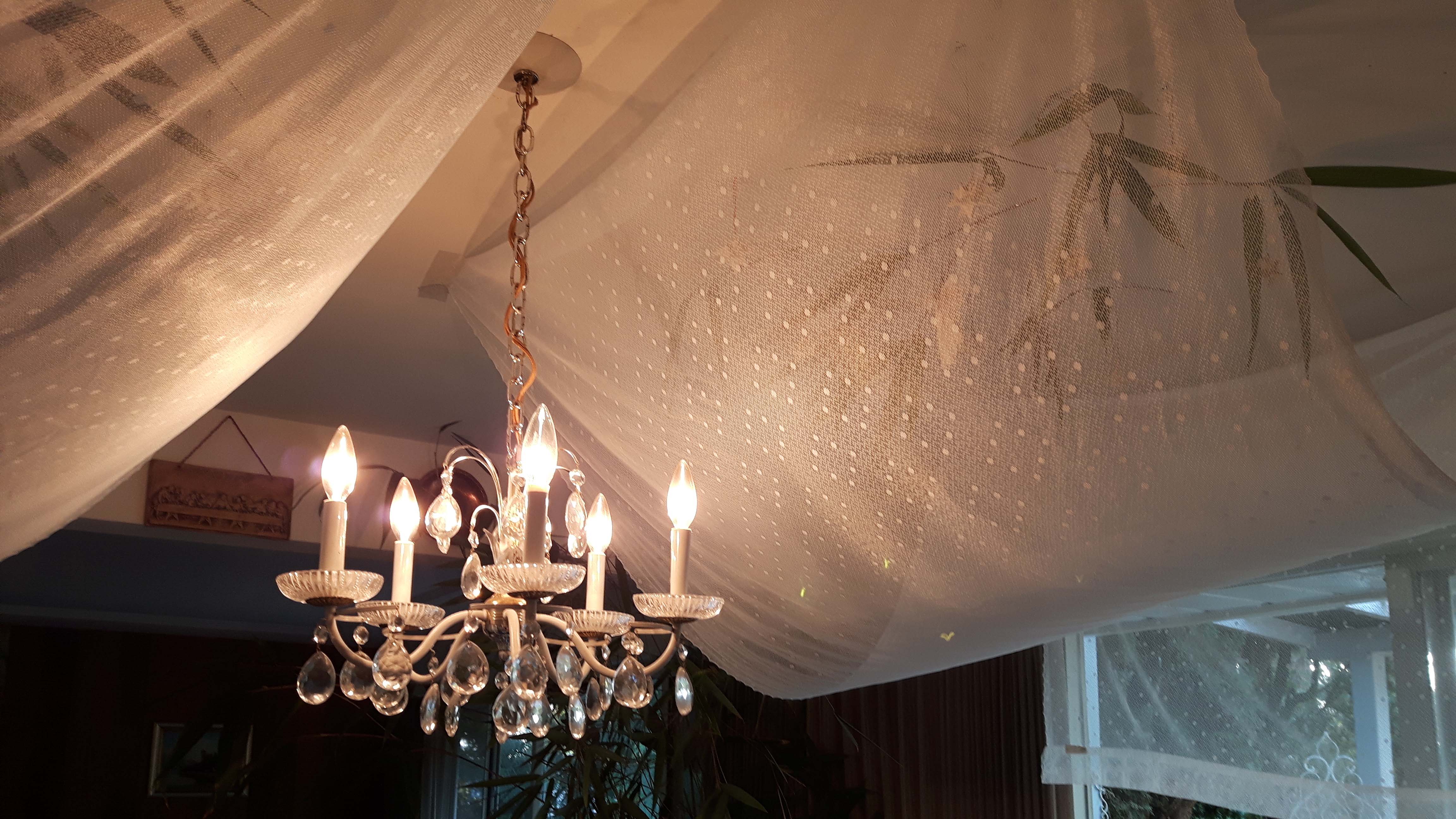 Maybe the Lord Jesus really was born during the Feast of Tabernacles. Makes sense. That the God who came to dwell with us would be as precise with His calendar as in all other things. But whether we think of His birth especially on December 25th or in the autumn, let’s focus on the miracle itself: He has come to tabernacle with us, to be with us. No matter what, He is with us in all things, blessing us in the midst of trials, working through all things so that we can enjoy Him forever.
