
How hard is it, really, to be grateful? How ready are we, to show appreciation, to say “Thank you”—and totally mean it—knowing that without that person, without that experience, we would not be who we are today?
October brings Thanksgiving Weekend for Canadians, and helps turn our thoughts to gratitude. 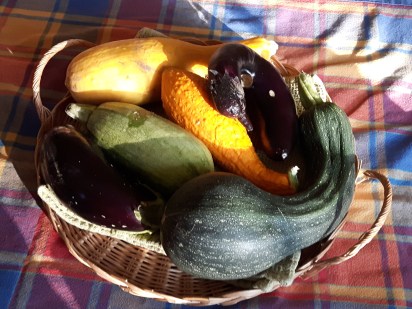 The second Monday in October, or the Sunday preceding it, is the day we try to get together with family and friends to celebrate with turkey and all the trimmings. For our American family and friends, the last Thursday in November is the great day. And autumn brings the biblical Feast of Tabernacles, Sukkot.
Wherever we find ourselves, harvest time offers great reason for gratitude: for what the land has offered us for our nourishment. And for what other nourishment we have been gifted with in the past year and in all the preceding years.
Typically, we give thanks for all the good things. And we’d be a sorry lot, I’d say, if we can’t remember too many. But if it’s hard some days, especially when it’s been a really hard season, that’s understandable. (If we haven’t quite been in a hard season, we’ll get there sooner or later.) For those suffering from Hurricanes Fiona and Ian, for example, gratitude takes on an entirely new dimension. And I think it’s in the hard and harder seasons that we especially need to ask for clarity of vision for reasons for gratitude.
But what about gratitude for the not-so-good things? Is that a possibility? Or do we just feel annoyed about the annoyances, and grieve over the deep losses? Might there be a good reason for having a certain genuine gratitude for those not-so-good things, some indeed very bad things, for what they offer us? (I must be feeling rather comfortable at the moment to even contemplate the possibility of my gratitude for the annoying and even the bad things. I’ll get back to this.)
For this October Thanksgiving season, I’d like to be more intentional about practising gratitude. Entitlement—shoo! Gratitude—hello! I’m thinking I need to invite gratitude into my soul, to be present to what I sense will be exponential reasons for grandly profuse gratitude. So I thought I’d prepare for this season by drafting
A Thank-You Note:
Thank you for the music
(yes, I’m remembering Abba: “Thank you for the music, the songs I’m singing / Thanks for all the joy they’re bringing. . . .”
Thank you for the music, yes, the Great Music that the Abba song also reminds me of: this Great Cosmic Song that sets our hearts singing with joy. This Music of the Great Cosmic Dance, the Great Cosmic Game that set creation in motion and sustains us all—the glorious song-dance-game in which each of us has a part, where we have our true place, and so discover our true selves. We, individually and corporately, and together with all things, were made for this harmony-in-community Music. I know of no better depiction of this mystery than chapter 17 of C. S. Lewis’s novel Perelandra which I’ve echoed here.  Gratitude for the music heightens my sense of hearing.
Thank you for the many tall shoulders
on which I stand. In remembrance, my parents and their parents all down through history. For your love and hard work and countless lessons that have helped shape and support me, then and always. That I got to be part of you. For teachers, for authors, for so many more people of these and other related callings—the Lord God knows you all and I am wanting to remember and honour you. It’s not hard to do so.
Thank you for those who walk
beside me. My family, my friends. My colleagues, my students. My neighbours, members of my community(ies). For your vital presence in my life, for your great wild generosity. For putting up with me when it’s not easy and loving me still. For being yourselves, your beautiful selves, and therefore helping me know what I could not otherwise begin to be and know. You help me to be a pilgrim.
Thank you for sweet nothings
that are not “nothings” at all—but truly great “somethings.” For the steady flow of daily blessings, multitudinous, Heaven-sent. Earth’s gravity never conquers you; it’s more like this: earthly gravity catches and resends Heaven’s streams in ongoing play, ongoing goodness. Would that I’d pay more attention so that my heart might more often leap up in worthy joy. . . . And so may my smiles and laughter increase. May my heart make greater room for the peace that the Lord offers me (John 14:27).
And now, to return to the question of gratitude for the not-so-good, the hard, and the harder. And within the outright terrible. Gratitude for the good, I’m sure, is the fertile ground in which to plant such seed.
But really, gratitude for or within the not-so-good and the outright hard, even terrible—really? How can that work?
Here’s a thought from my years of teaching of The Hobbit with my first-year university students: there is a path that leads from suffering to hope. 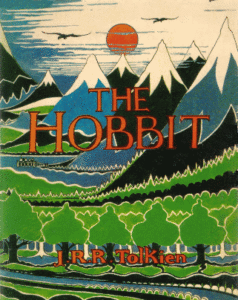
Hobbits, as Tolkien depicts them (and he said he was one himself, which is a consolation to the rest of us who know we don’t look or feel like heroes by a long shot), don’t like to leave their comfort-zones. Even the ones who volunteer for danger do not do so by disposition or by fluke. They do so because something larger than their personal comfort is at stake—friendship, honour, and eventually all of life on Middle-earth. Like most of us, they try to avoid suffering and cannot see what it might have to do with hope.
Bilbo, as we discover, is no classic hero: he is no go-getter, no self-reliant strong man. He seems like a wimp, according to the dwarfs (which is ironic, as it turns out). Bilbo starts off looking rather unheroic but becomes the hero of the story (unconventional, mind you, but I’m getting ahead of myself).`
In The Hobbit, suffering and mortal danger arise quickly, and continue on a grander scale in The Lord of the Rings. In following Bilbo’s journey in The Hobbit with my students, I have come to see that what St. Paul talked about in Romans 5:3-4 works like a formula for sojourners who want to travel well, whatever comes their way: “. . . suffering produces perseverance; perseverance, character; and character, hope.” It’s obvious how this becomes true for Bilbo: once suffering hits, again and again, he learns to persevere. (He could quit, but he doesn’t.) As Bilbo perseveres, he develops character strengths previously unknown to him. And increasingly, the once reluctant, even fearful, hobbit grows in soul. He develops surprising resourcefulness, and with every step continues to move through suffering into hope.
Here’s another thought on practicing gratitude for or within the not-so-good, the hard, and the harder things. While I would have wished to have not had specific difficult experiences in my life, in hindsight, I gradually came to realize that I am grateful for the lessons that they have begun to teach me. I wouldn’t want to miss the riches I’ve gained (and am gaining) from the lessons. Lessons like these: “I can’t” gets replaced with “You must” and then “I can”; that I am never alone, never relying on my own strength and wisdom; and that God is to be trusted for bringing greater good out of any situation.
This season of Thanksgiving, I for sure want to rejoice in the Great Good that keeps coming my way. And when the easy becomes hard, then harder, I hope to practice the gratitude I need to do things well. To remember that it’s about “rejoicing in our sufferings” (Romans 5:3)—not because of them, no, but while I’m in these situations—because of the Greater Good that is coming.
Autumn isn’t necessarily seen as a growing season; the harvest is in. Continue reading
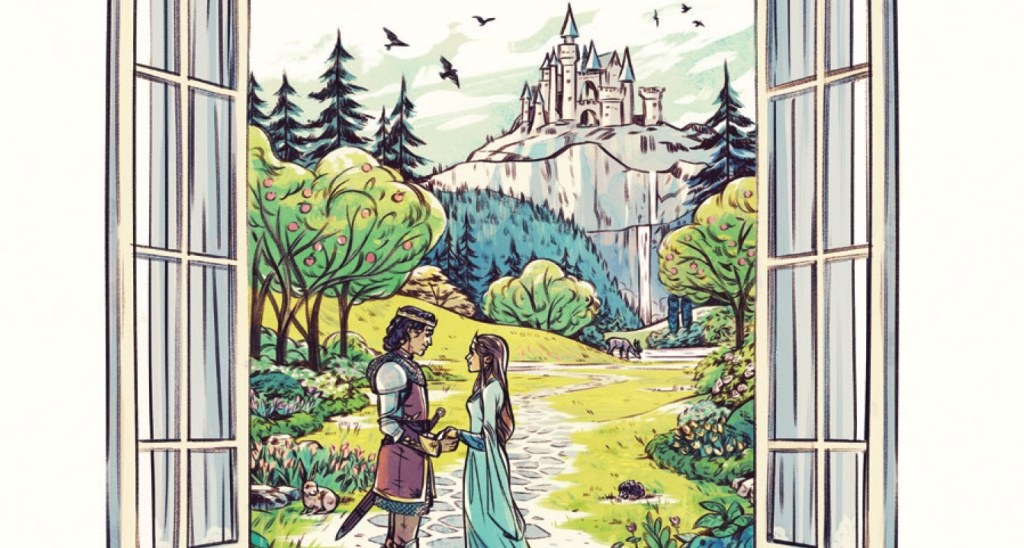
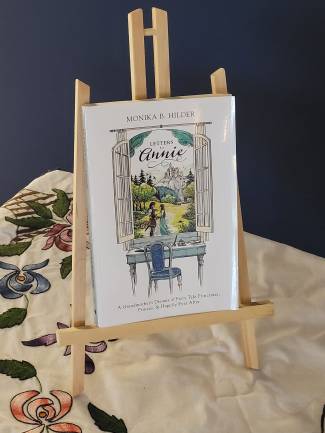 The best fairy tales teach us that we live in community, and that we are offered countless gifts to help us on our way. Good magic happens through community.
 (This beautiful venue came about through the artistic talent and amazing organization of one dear staff member and her kindly helpers.) Students, colleagues, family, and friends filled the gently lit room overlooking the lake. Family and friends from as far away as California tuned in online. A graduate drove up from Washington State, bringing a bouquet of flowers.
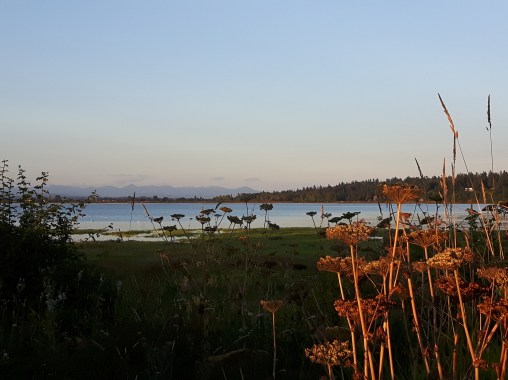
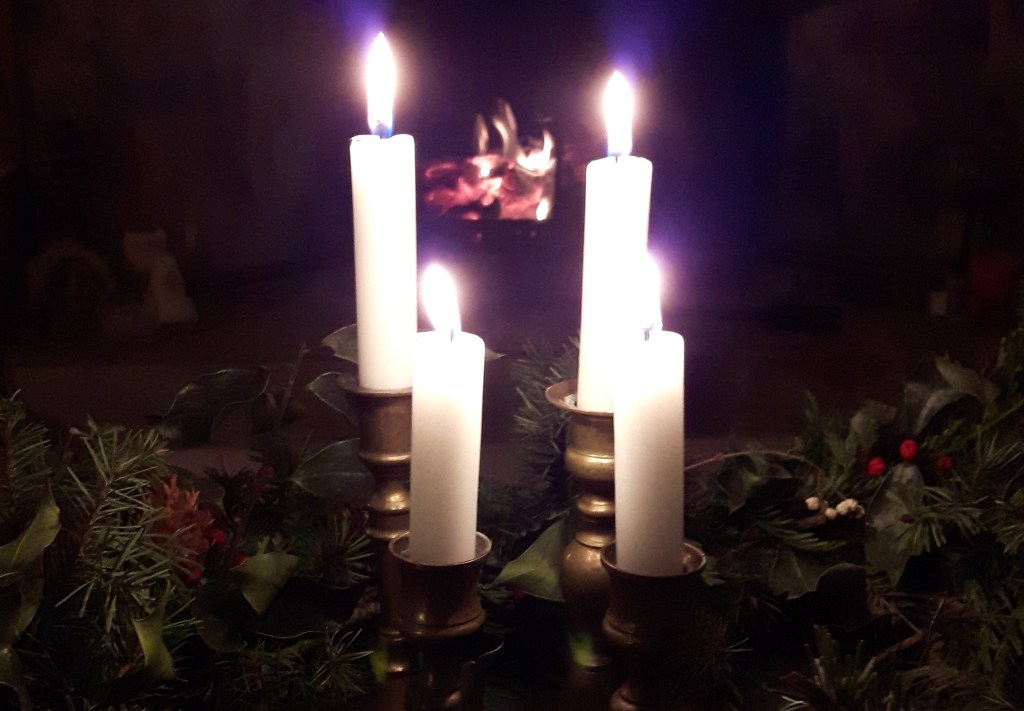
 This Advent, in the midst of my end-of-semester professor’s grading of student papers (all so interesting and worthy), in the aftermath of torrential rains that have recently hammered and flooded parts of my province of British Columbia with a vengeance unimagined by most of us, and just in the midst of a very hurting and divided world, well, I pause to consider a marvellous event that happened last Advent. A space for gratitude. Our Advent miracle. With my wonderful colleagues, Drs. Sara L. Pearson and Laura N. Van Dyke, I co-edited and published a book that saw the light of day this month one year ago! In the midst of many things, the Covid crisis being one of them, this book came to birth in December 2020: The Inklings and Culture: A Harvest of Scholarship from the Inklings Institute of Canada. Twenty-seven chapters from contributors.
 Amen to that. This book, like all good things, took time. If you tend to impatience, like me, then you’ll know all about that jerking at the tether when things don’t happen according to your preferred schedule. The proper unfolding of events in the twin tether of time and space is not quite our favourite idea. But then, oh, glorious, just when you think something is maybe not going to come about at all (because you’re still struggling with impatience, among other rotten things), the miracle happens. The job is done! And you truly know that the energies invested which you thought were yours solo (lone ranger problem), but were mightily infused with the heavenly source of all energy, and then, ta-da! the perfect opening of doors followed—all this birthed the miracle. In hindsight, it happened faster than you could have guessed. (Meanwhile, the naysayers have all vanished, which is what they should have done in the first place—there’s my impatience again. But let’s remember too: naysayers have their place: they can make you stronger and when that happens you get to prove them wrong. Double-bonus. But don’t get too proud about it. Maybe you can’t quite or shouldn’t say, “I told you so.” But you might whisper, “I’m glad I didn’t listen to you, not very much anyway.”) So YAY, the job is done! Big WOW. And you got to have a part in it—how amazing is that! You end up shaking your head, wondering how you got invited into the grand dance. I love how Madeleine L’Engle once said that every book has its own angel, its own perfect time for appearance. (At the moment, I don’t recall whether I heard it in one of her live lectures or read it.)
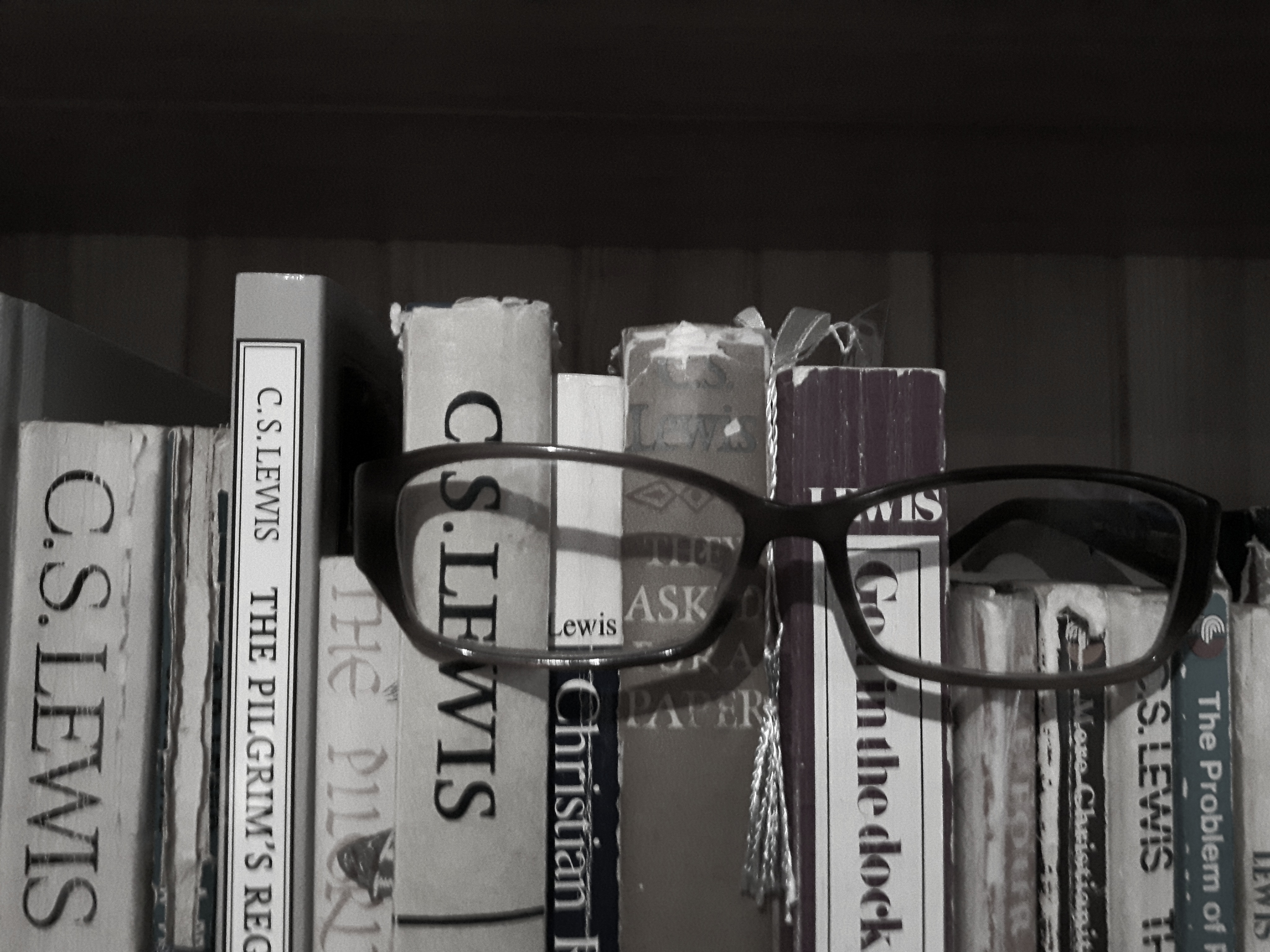 Bifocal vision marks the end of a youthful era. What has this possibly to do with hope? I suppose leaving one’s youth behind can be a kind of good? (Let’s try to count the ways in which loss also leads to gain.)
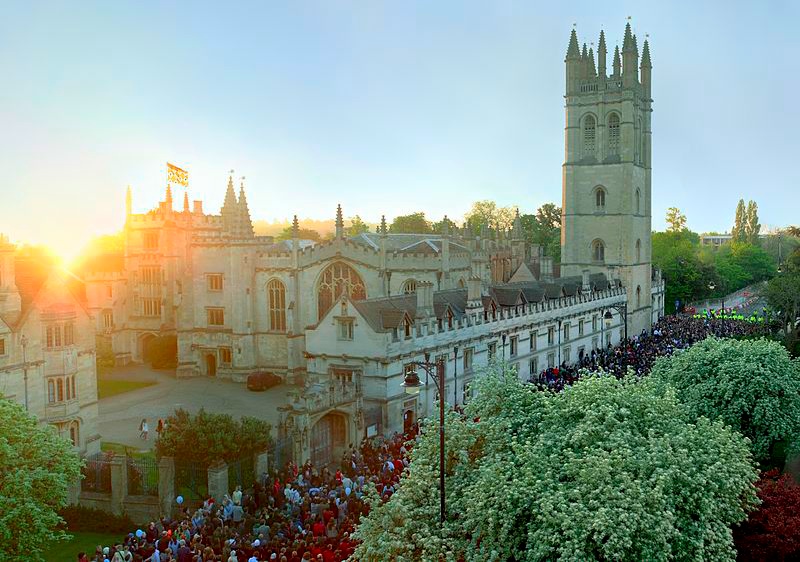
 Stephen was the first person who invited me to give a keynote address. It was for Oxford, at C. S. Lewis’s Magdalen College, no less. What?! Me?! Oh, what a marvelous time it was, that Oxford conference by the George MacDonald Society in 2014. (You can read a lot of what we thought and said in the book, Informing the Inklings: George MacDonald and the Victorian Roots of Modern Fantasy.)
 I have another reason for associating Stephen with bifocal vision. Every time I teach George MacDonald, which is a fair bit, I refer my students to Stephen’s comment on this Victorian author. MacDonald, Stephen said, had “bifocal” vision, meaning that he saw two worlds at once, the temporal and the eternal (“The Two Worlds of George MacDonald”).
 So when I walk darkening wintry streets, I want to remember that the weather will change. Stephen’s comment to us that one night also helps me to remember. Frost for a time but not forever. The Great Thaw is coming. The White Witch’s reign is temporary; Aslan will return. And as I walk along I need to see what’s right in front of me as clearly as possible; but I also need to have the long view of life everlasting. The short and the long view—bifocal vision—enables hope.
 A few evenings ago my immediate family circle celebrated the beginning of Sukkot, the biblical Feast of Tabernacles or Shelters. As we made our preparations, I contemplated again the first time we did so some years ago. I recalled so vividly the wondrous moment when I put my head back and gazed up through the mini-forest of cut bamboo branches decorating our backyard deck: up through the swaying green fronds into the deep blue autumn sky before sunset, and came awake with this startling thought. “So, this is Sukkot,” I pondered. “So this is why the Israelites were to build booths to dwell in for a week. They were to begin to understand this amazing fact: that the God of the universe had come to tabernacle with them, to dwell with them.” And somehow in that split second the cosmos opened in my heart, even more profoundly in that instant than each lovely Christmas year after year. This God, yes, this God has come to tabernacle with us, with me, now, always. Christmas in October—Christmas always.
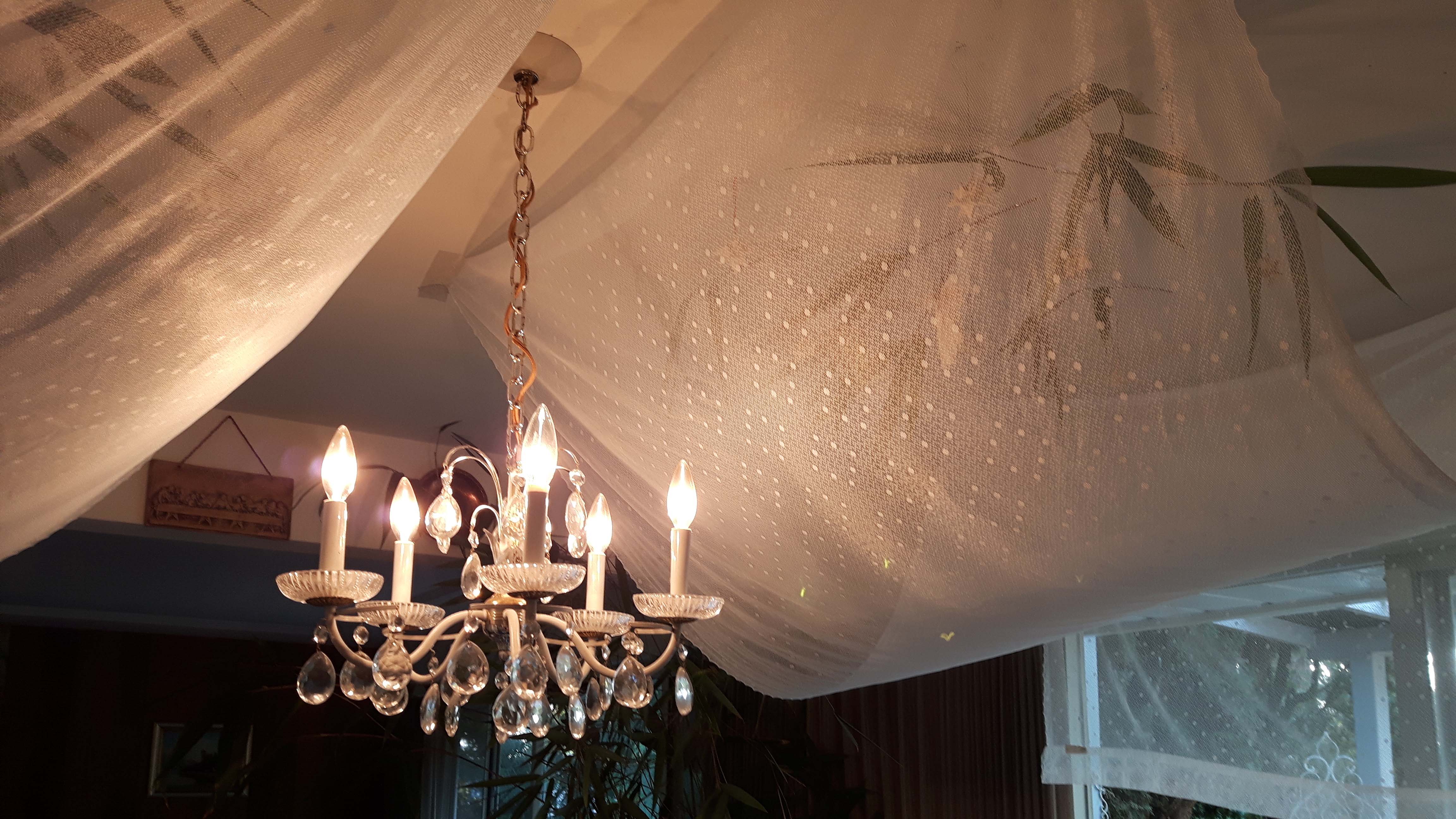 Maybe the Lord Jesus really was born during the Feast of Tabernacles. Makes sense. That the God who came to dwell with us would be as precise with His calendar as in all other things. But whether we think of His birth especially on December 25th or in the autumn, let’s focus on the miracle itself: He has come to tabernacle with us, to be with us. No matter what, He is with us in all things, blessing us in the midst of trials, working through all things so that we can enjoy Him forever.
 A line from Laura Ingalls Wilder rings true: “I am beginning to learn that it is the sweet, simple things in life which are the real ones after all.” And I wonder, in this season of approaching harvest, which sweet, simple, splendid harvest fruits might we notice? Enjoy? Sure, we count what we have lost, and must, but what might we have also gained?
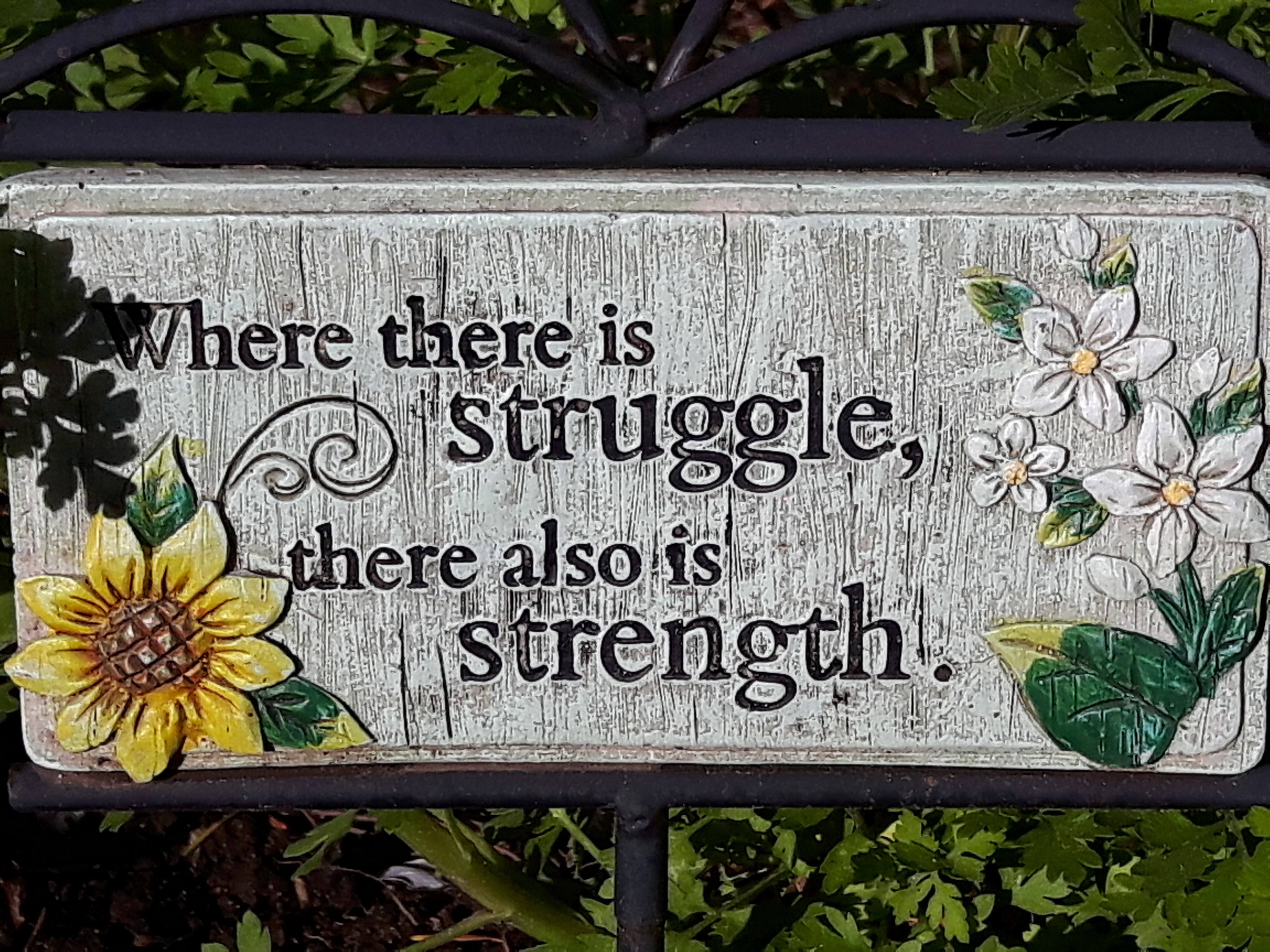 Meanwhile, as we’ve been wisely told, take one day at a time, one moment at a time. And count the joys, keep counting the joys, as we go.
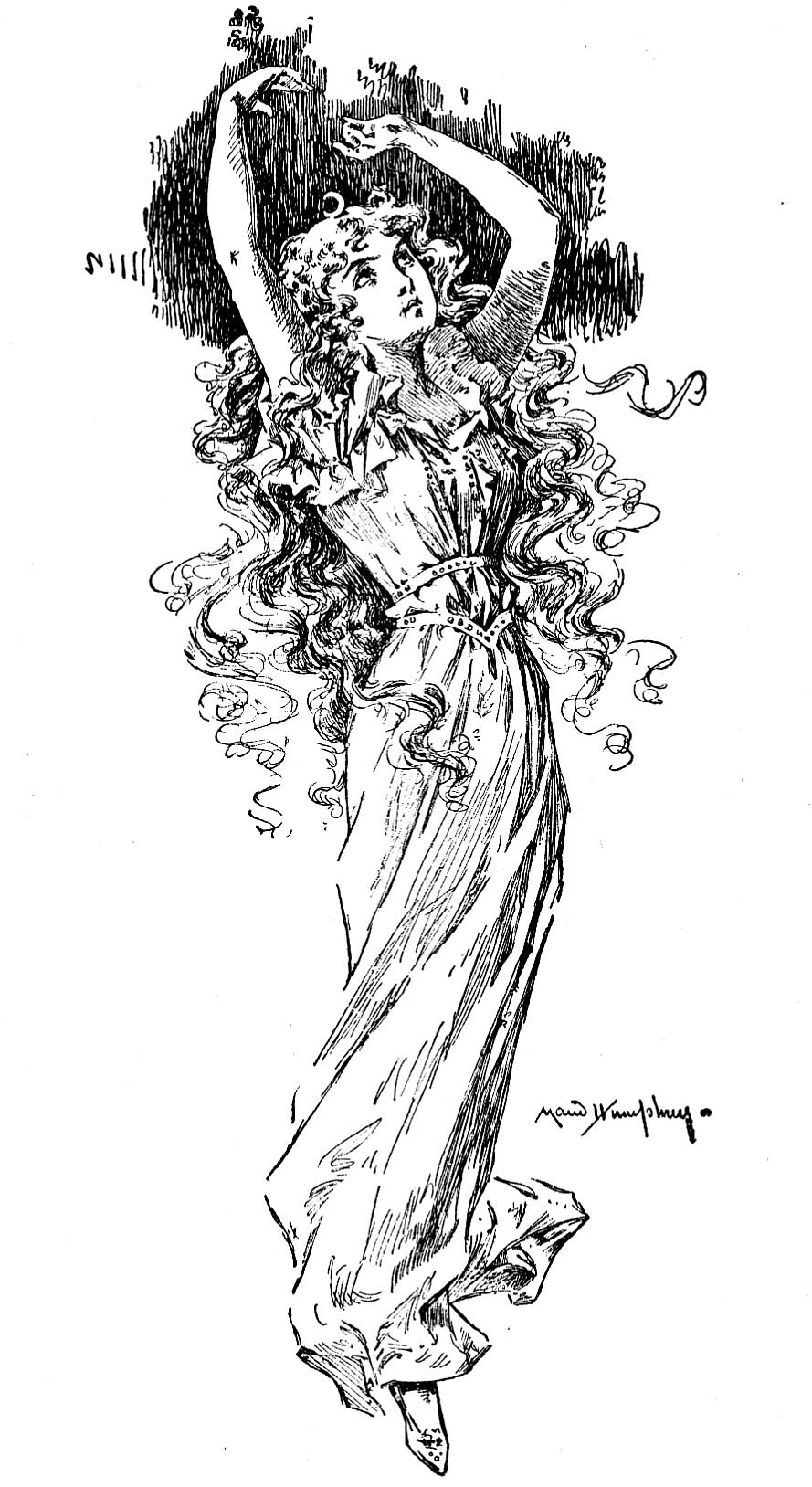 With this basket full of autumn joys, I’m thinking more about how MacDonald’s Princess Daylight, who in spite of the evil spell that was put on her, is “dancing to her own music.” In the end, evil is overcome, as it always is. But here’s the thing: how important it was for Daylight in the long meanwhile of suffering to dance to her own music as much as she could. No, she wasn’t always dancing, but as much as she could dance she did—perseveringly, repeatedly, joyfully. Some days she was just plain too worn and decrepit to dance, and the only thing to do was sleep and, more than that, especially when sleep didn’t come, wait.
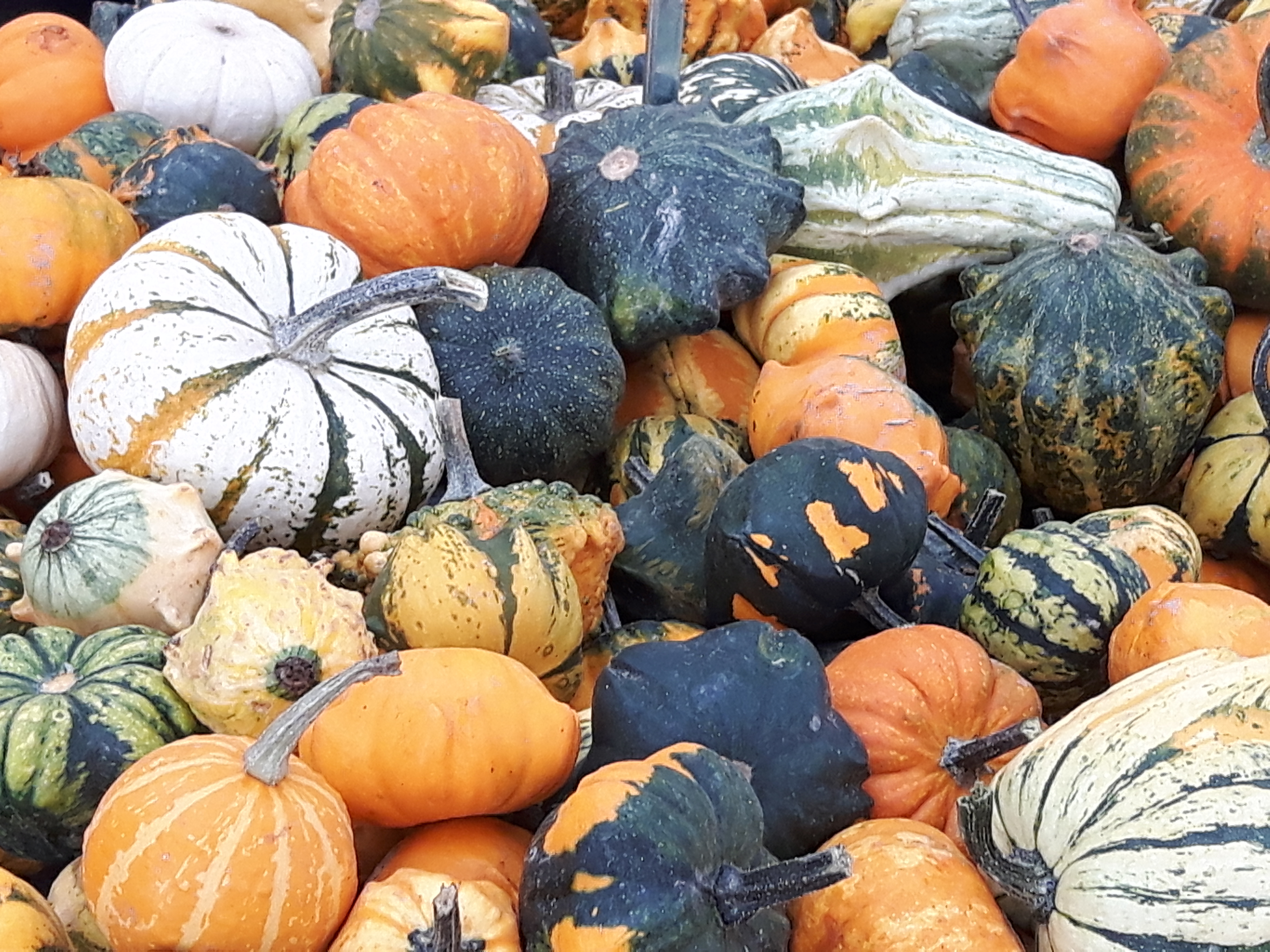 This autumn I could pray for a double portion of courage and faith. That’d suit me fine to get it. But right now maybe I’ll just ask for an outbreak of sanity in my own heart, in this hour, on this day. Start where I am. Maybe that’s how to get ready to receive more courage, more faith. And when I can, which is most likely oftener than I suppose, I’ll dance to my own music, celebrating all things bright and beautiful.
 Sorrows’ Doors—the portal to deepest truth, deepest joy? What thresholds must I overcome to agree with MacDonald? Suffering, sorrow—this we try to avoid, at all cost, do we not? But that Sorrow is the very doorway I must pass through in order to enter Joy? And therefore should I succeed in avoiding it, or rather ignoring it, I would miss what I most long for? Is the Victorian author right to insist, “As in all sweetest music, a tinge of sadness was in every note. Nor do we know how much of the pleasures even of life we owe to the intermingled sorrows”?



 Monika Hilder